Converting 500 mg to ml: A Comprehensive Guide
TABLE OF CONTENTS

In the realm of pharmaceuticals and scientific measurements, the conversion between milligrams (mg) and milliliters (mL) is a common yet crucial task. Understanding how to convert 500mg into mL can be essential for healthcare professionals, pharmacists, and individuals involved in medication management. This article will delve into the nuances of this conversion, highlight challenges, and provide a comprehensive guide to accurately achieving this conversion.
Grasping the Basics: 500mg into mL
To accurately convert 500mg into mL, it’s important to grasp the distinction between the units involved. Milligrams measure mass, whereas milliliters measure volume. These metrics cannot be directly converted without additional information regarding the substance’s density or concentration. This distinction is crucial in the medical field, where precision determines the correct medication dosage.
Why Density Matters
In converting 500mg into mL, the density of the substance plays a pivotal role. The formula used for this conversion is:
[ \text{Volume (mL)} = \frac{\text{Mass (mg)}}{\text{Density (mg/mL)}} ]
This formula implies that any conversion between mass and volume necessitates knowing the material’s density, typically expressed in mg/mL. Substances with different densities will result in different volumes when converting a given mass to mL.
Practical Application: Converting 500mg into mL
For practical purposes, let’s assume we need to convert 500mg of a substance with a known density of 1 mg/mL. Using the formula:
[ \text{Volume (mL)} = \frac{500 \text{ mg}}{1 \text{ mg/mL}} = 500 \text{ mL} ]
Keep in mind, this is a simplified scenario assuming the substance’s density is 1 mg/mL, similar to water. Different substances will require the application of a different density value in the conversion formula.
Challenges in Converting 500mg into mL
While the formula is straightforward, real-world applications for converting 500mg into mL can be complex. Densities of substances vary, and in many cases, precise concentration measurements are crucial. Especially in pharmacology, the precise density or concentration must be confirmed to avoid medication errors that could jeopardize patient health.
Explore more on med conversions
Conclusion
Converting 500mg into mL is not as straightforward as it may initially seem because it necessitates understanding density and concentration. Ensuring precision in this conversion safeguards efficacy in pharmaceutical applications and patient safety. Always consult with medical or pharmaceutical professionals when handling such conversions to guarantee accurate results.
FAQs
What is the conversion formula for 500mg into mL?
The formula for converting 500mg into mL involves dividing the mass by the substance density:[ \text{Volume (mL)} = \frac{\text{Mass (mg)}}{\text{Density (mg/mL)}} ]
Can 500mg into mL be directly converted?
No, direct conversion is impossible without specific density information. The conversion involves understanding the particular substance’s density or concentration.
Does conversion between mg and mL vary across substances?
Yes, variations exist due to differing densities. Each substance will require a unique density value for accurate conversion.
How can I ensure precision in converting 500mg into mL?
Precision requires accurate knowledge of the substance’s density. For medications or critical substances, always consult professional resources or experts for guidance.
BIG SALE | FAST SHIPPING
HOT PROMOTIONS!

ZPHC Clomid Clomiphene 25mg/tablet | 100 Tablets Total: 2500mg
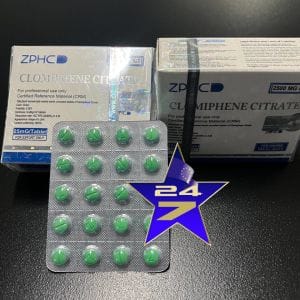
Original price was: $ 159.00.$ 65.00Current price is: $ 65.00.



ZPHC UltraMix 1ml amps x 10 amps - 1ml = 250mg
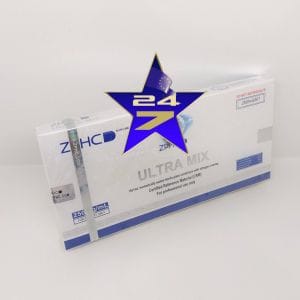
Original price was: $ 259.00.$ 179.00Current price is: $ 179.00.
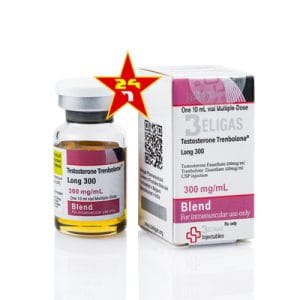
STADA MEGA CUTS BLEND 300 MG 10ML (TRENBOLONE)
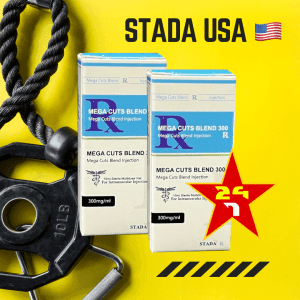
Original price was: $ 129.00.$ 119.00Current price is: $ 119.00.
Converting 500 mg to ml requires additional information about the substance in question, specifically its density or concentration, as milligrams (mg) measure mass while milliliters (ml) measure volume. Without a specific density or concentration, it is impossible to provide a straightforward conversion because different substances have varying densities. For instance, with water, which has a density of 1 g/ml, 500 mg corresponds to 0.5 ml. However, other liquids or solutions might have different densities due to the presence of solutes or their inherent physical properties, which would affect the conversion. If dealing with a pharmaceutical or chemical solution, the concentration given in terms such as mg/ml needs to be used to derive the volume from the mass. Therefore, for an accurate conversion, it is crucial to understand the substance’s specific characteristics to correctly interpret what 500 mg would translate to in milliliters.