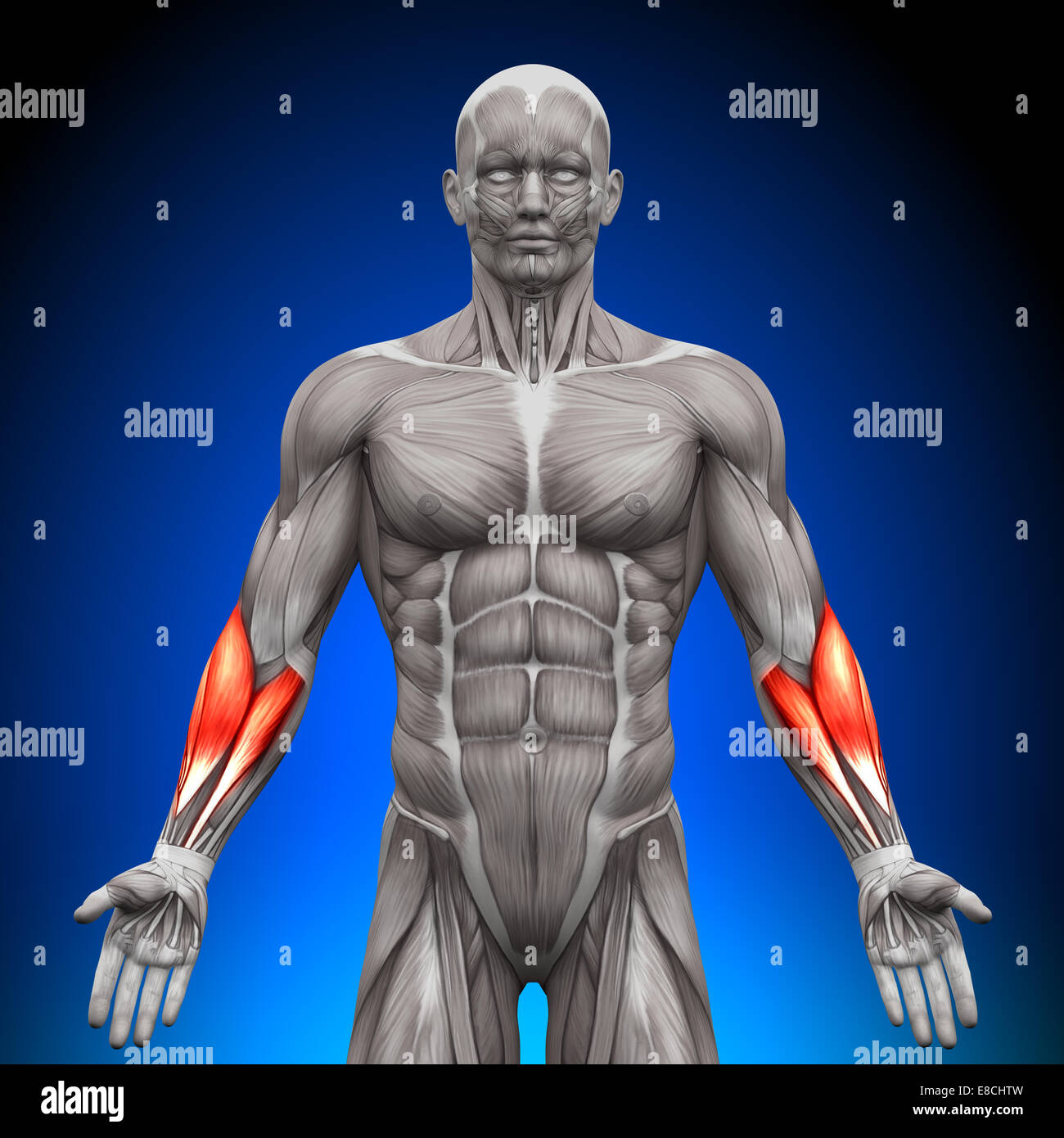
Forearms
TABLE OF CONTENTS

Understanding the Forearms: Anatomy and Function
The forearms are a crucial yet often overlooked part of the human anatomy, playing a significant role in many everyday activities. Located between the elbow and wrist, the forearm consists of two bones, the radius and ulna, along with various muscles, ligaments, and tendons. These components work together to enable a wide range of motion and strength in hand and wrist movements.
Anatomy of the Forearms
The muscular structure of the forearms is divided into two compartments: the anterior (flexor) and posterior (extensor) compartments. The anterior compartment contains muscles such as the flexor carpi radialis and flexor carpi ulnaris that enable the bending of the wrist and fingers. Conversely, the posterior compartment includes muscles like the extensor carpi radialis longus and brevis, which allow for the extension of the wrist and fingers.
Functionality and Importance
The primary functions of the forearms include flexion, extension, pronation, and supination of the wrist and hand. This range of motion is essential for gripping, lifting, and manipulating various objects. Strong and flexible forearms are important for athletes, manual workers, and anyone seeking to maintain functional independence in daily life.
Strengthening and Conditioning
To enhance forearm strength, one can engage in exercises such as wrist curls, reverse wrist curls, and grip strengtheners. Stretching the muscles regularly can also help maintain flexibility and prevent injuries. Incorporating these exercises into a workout routine can lead to improved performance in activities that rely heavily on wrist and hand strength.
FAQs about the Forearms
Q1: Can wrist pain indicate a problem with the forearms?
A1: Yes, wrist pain can sometimes be related to muscle or tendon issues in the forearms. It is important to consult a healthcare professional for accurate diagnosis.
Q2: Are there benefits to training the forearms separately from other body parts?
A2: Targeted forearm exercises can improve grip strength and prevent imbalances, benefiting overall physical performance.
Q3: How often should forearm exercises be performed?
A3: Including forearm exercises 2-3 times a week within a balanced workout regime can yield effective results.
FREE SHIPPING
CLICK HERE!
HOT PROMOTIONS!




Beligas Propha Testosterone 10 vials x 1ml (Propionate) 150mg

Original price was: $ 84.00.$ 79.00Current price is: $ 79.00.

STADA ANAVAR 50MG 50 TABLETS

Original price was: $ 159.00.$ 129.00Current price is: $ 129.00.



[ratemypost]
The forearms are an essential part of the human anatomy, acting as the crucial link between the upper arm and the hand. Comprising two long bones, the radius and the ulna, the forearm serves various vital functions related to movement and strength. It is adeptly structured to facilitate rotational motions such as pronation and supination, allowing the palm to turn upwards and downwards efficiently. This rotational capability is crucial in performing everyday tasks, from twisting a doorknob to flipping a page in a book. The forearm is also equipped with numerous muscles, tendons, and nerves that contribute to the dexterity and strength necessary for gripping, lifting, and pushing. Among its major muscle groups are the flexors and extensors, which are responsible for bending and straightening the wrist and fingers, respectively.
Beyond its functional roles, the forearm has implications in terms of fitness and aesthetics. Strengthening the muscles of the forearm can enhance grip strength, which is often a fundamental measure of overall body strength and a predictor of certain health outcomes. Exercises such as wrist curls, reverse wrist curls, and forearm rotations help in building muscle endurance and size, contributing to improved performance in activities ranging from rock climbing to playing musical instruments. A well-developed forearm not only supports functional ability but also complements the proportionate appearance of the arm and overall physique. Whether in the pursuit of athletic excellence or simply functioning efficiently in daily life, the forearms play an indispensable role that underscores their significance in human physiology.