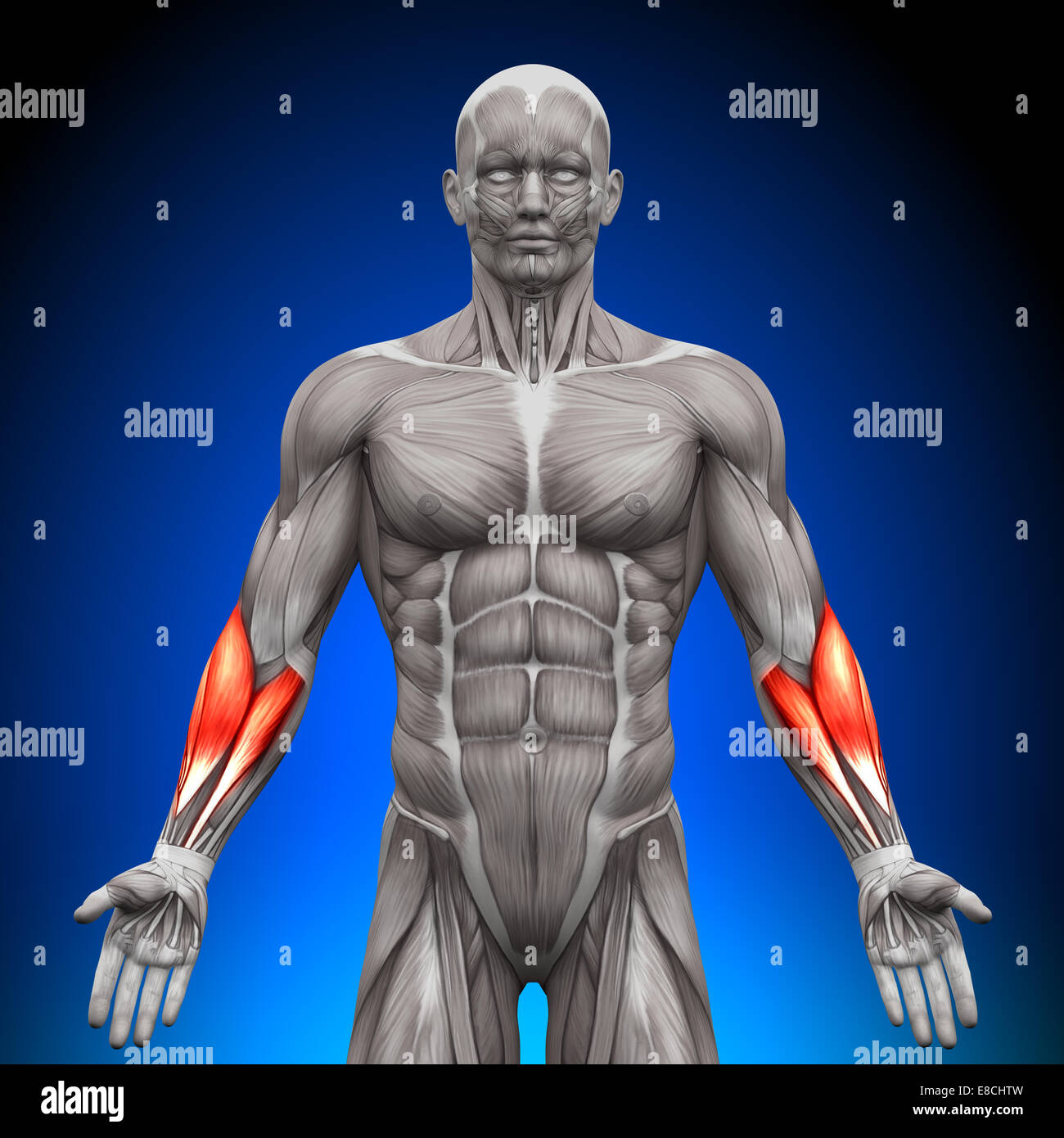
Forearms muscles
TABLE OF CONTENTS

The forearms muscles play a crucial role in the movement and strength of the hands and wrists. They are involved in a variety of daily activities ranging from lifting objects to typing on a keyboard. Understanding these Forearms Muscles can help individuals enhance their grip strength and perform better in activities that require hand strength.
Anatomy of the Forearms Muscles
The forearms muscles are divided into two main sections: the anterior (front) compartment and the posterior (back) compartment. The anterior compartment contains muscles that are primarily responsible for flexion (bending) movements, such as flexor carpi radialis, flexor digitorum superficialis, and palmaris longus. On the other hand, the posterior compartment contains muscles responsible for extension (straightening) movements like the extensor carpi radialis longus, extensor digitorum, and extensor carpi ulnaris.
Functions of Forearms Muscles
The primary function of the forearms muscles is to control the movement of the wrist and fingers. This includes flexion and extension, pronation (rotation of the forearm so the palm faces down), and supination (rotation of the forearm so the palm faces up). These muscles are also critical in tasks requiring fine motor skills and grip strength, such as writing, lifting weights, and playing instruments.
Strengthening Forearms Muscles
To strengthen the forearms muscles, incorporating exercises like wrist curls, reverse wrist curls, and grip training can be beneficial. These exercises target both the anterior and posterior compartments, enhancing overall muscle endurance and power.
FAQs
What is the importance of forearms muscles in sports?
Forearms muscles are vital in sports that require grip strength and precision, such as rock climbing, tennis, and gymnastics. Strong forearms improve performance and reduce the risk of injury.
How can one prevent injury to the forearms muscles?
Regular stretching and strengthening exercises, along with proper technique and positioning during activities, can help prevent injuries to the forearms muscles.
Is it okay to work out the forearms muscles every day?
While it’s important to strengthen the forearms muscles, giving them time to rest and recover is equally crucial. It is generally advised to include rest days between workouts targeting these muscles.
Incorporating knowledge about the forearms muscles into your fitness routine can significantly enhance your physical capabilities and overall well-being.
FREE SHIPPING
CLICK HERE!
HOT PROMOTIONS!

ZPHC Anavar 10mg x 100 tablets

Original price was: $ 139.00.$ 119.00Current price is: $ 119.00.








The forearm is a complex and intricate part of the human anatomy, featuring a network of muscles that work together to facilitate a wide range of movements. There are two primary groups of muscles in the forearm: the flexors and the extensors. The flexor muscles are located on the anterior (front) compartment of the forearm. These muscles are primarily responsible for flexing the wrist and fingers, allowing for the gripping and holding of objects. Key muscles in this group include the flexor carpi radialis, flexor carpi ulnaris, palmaris longus, and the flexor digitorum superficialis and profundus. Each of these muscles plays a crucial role in tasks that require precision and dexterity, from typing on a keyboard to playing musical instruments.
On the posterior (back) side of the forearm, the extensor muscles extend the wrist and fingers, performing actions that open the hand or lift objects away. Major muscles in this compartment include the extensor carpi radialis longus and brevis, extensor carpi ulnaris, and extensor digitorum. These muscles also contribute to the rotation of the forearm, enabling actions such as turning a doorknob or opening a jar lid. The balanced interaction between the flexor and extensor muscles allows for intricate and refined movements that are essential for daily activities, emphasizing the importance of forearm muscle health. Strengthening and maintaining the flexibility of these muscles can prevent strain and injury, which are common in activities involving repetitive hand and wrist movements.