
Description
TABLE OF CONTENTS
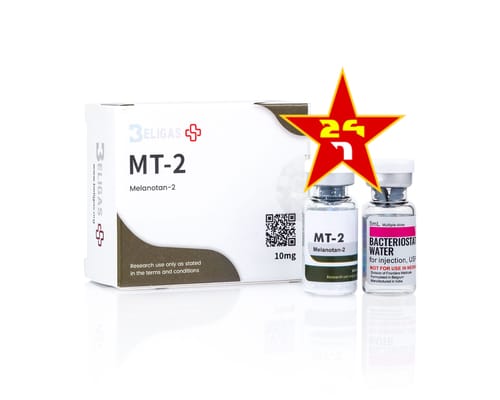
In recent years, there has been a growing interest in products that promise enhanced skin tanning without the need for prolonged sun exposure. Among these, Beligas MT-2 Melanotan II has gained attention for its purported ability to stimulate melanin production. This article seeks to delve into the uses and effects of this peptide, providing an informative overview for those curious about its potential benefits and risks.
Understanding Beligas MT-2 Melanotan II: An Overview
Beligas MT-2 Melanotan II is a synthetic analog of the naturally occurring peptide hormone alpha-melanocyte-stimulating hormone (α-MSH). It is designed to mimic the effects of α-MSH, primarily by stimulating the production of melanin in the skin. This process, known as melanogenesis, results in increased pigmentation, leading to a tanned appearance. Originally developed for its potential to treat skin disorders, Melanotan II has gained popularity as a tanning agent. The compound is typically administered via subcutaneous injection, allowing it to enter the bloodstream and exert its effects on melanocytes, the cells responsible for pigment production.
The Uses of Beligas MT-2 Melanotan II
The primary use of Beligas MT-2 Melanotan II is to achieve a cosmetic tan without the need for extensive sun exposure, which can reduce the risks associated with ultraviolet (UV) radiation, such as skin damage and increased risk of skin cancer. Additionally, some users explore its potential benefits for individuals with fair skin types who may find it difficult to tan naturally. Beyond its cosmetic applications, research has investigated its potential therapeutic uses, such as treating conditions like erythropoietic protoporphyria, a rare genetic disorder that causes sensitivity to sunlight. However, it is important to note that the use of Melanotan II for these purposes is not universally approved and remains a subject of ongoing research.
The Effects and Safety Concerns of Beligas MT-2 Melanotan II
While Beligas MT-2 Melanotan II can effectively increase melanin production and result in a tanned appearance, its use is not without potential side effects and safety concerns. Commonly reported side effects include nausea, facial flushing, and increased libido, which may be attributed to the peptide’s influence on other hormonal pathways. More concerning, however, are reports of the development of new moles or changes in existing moles, which could pose a risk of skin cancer. The long-term effects of Melanotan II are not well-understood, and its use is not approved by major health authorities such as the FDA. Thus, individuals considering its use should proceed with caution and consult healthcare professionals.
In conclusion, while Beligas MT-2 Melanotan II offers an intriguing option for those seeking a tan without sun exposure, it is accompanied by a range of considerations that must be carefully weighed. The promise of a safer tanning alternative is tempered by the lack of comprehensive safety data and regulatory approval. As research continues, those interested in using Melanotan II should remain informed about its potential risks and benefits, ensuring that any decision to use the peptide is made with a clear understanding of the implications for health and well-being.
Related products
-
 Sale!Original price was: $ 119.00.$ 99.00Current price is: $ 99.00.
 -
 $ 129.00
 -
 $ 129.00