
Seated Dumbbell Curls: Building Stronger, More Defined Biceps

In the vast landscape of strength training, seated curls with dumbbells stand out as a pivotal exercise for those aiming to sculpt their biceps. This classic workout is a staple in the regimen of many fitness enthusiasts, recognized for its ability to target and isolate the bicep muscles effectively. By focusing on seated curls, you can ensure that your form is correct, minimizing the risk of injury while maximizing muscle engagement.
Benefits of Seated Curls Dumbbell
Seated curls with dumbbells offer numerous benefits that make them an appealing choice:
- Isolation of Biceps: The seated position aids in stabilizing the body, allowing for concentrated pressure on the biceps and reducing the assistance from other muscle groups.
- Improved Form: Sitting down during curls prevents the momentum that often cheats the workout’s effectiveness. You can’t sway or use your legs to lift the weight, ensuring that your biceps are doing all the work.
- Versatility: By varying the angle of your forearms, adjusting the weight, or alternating arms, seated curls provide a versatile range of exercises to prevent muscle adaptation and continue progression.
How to Perform Seated Curls Dumbbell
Step-by-Step sign
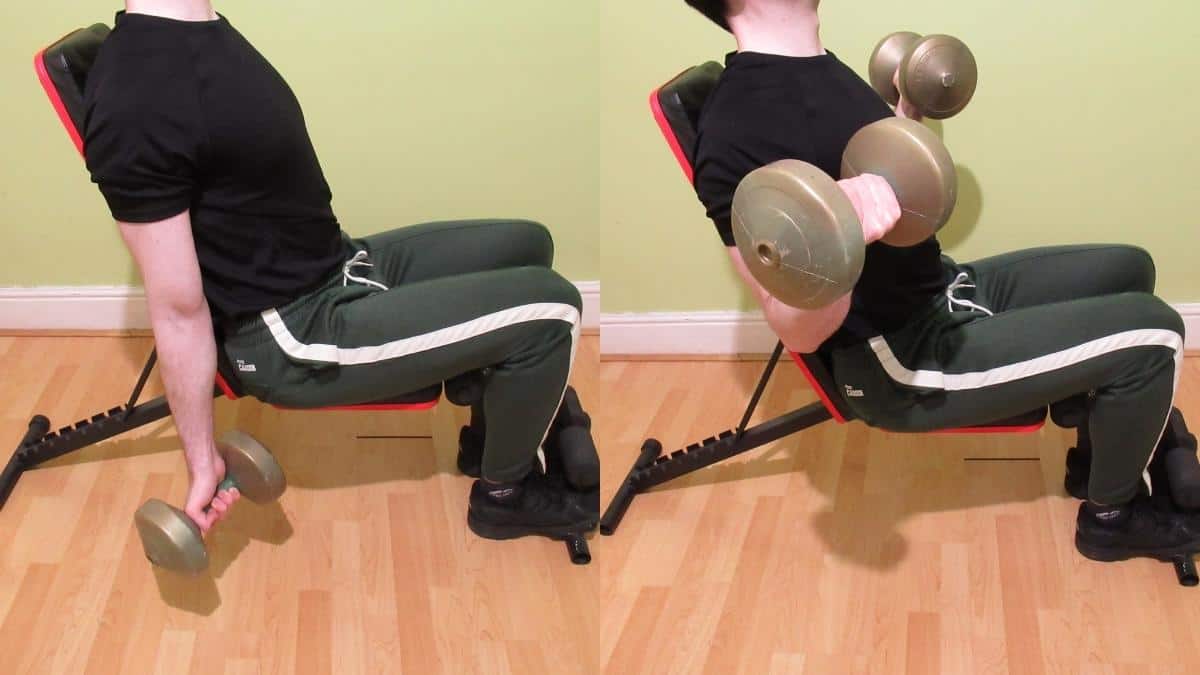
- Position Yourself: Sit on a bench with your feet flat on the ground, hip-width apart. Ensure your back is straight and your core is engaged.
- Grip the Dumbbells: Hold a dumbbell in each hand with an underhand grip, palms facing forward.
- Execute the Curl: Slowly curl the weights up towards your shoulders by bending your elbows. Keep your upper arms close to your torso and avoid swinging the weights.
- Control the Descent: Lower the dumbbells gradually back to the starting position to maintain tension in the biceps.
Tips for Success
- Control Your Breathing: Inhale as you lower the dumbbells and exhale as you lift them.
- Focus on Form: Quality over quantity. It’s better to use lighter weights with proper form than lift heavier with poor technique.
For additional guidance, consider checking resources like Bodybuilding.com or Men’s Health.
Conclusion
Seated curls with dumbbells are an essential exercise for anyone looking to develop well-defined biceps. With the advantages of isolation, improved form, and exercise versatility, they fit seamlessly into any strength training program. By focusing on correct technique and gradually increasing weight or repetitions, you can ensure sustained progress and avoid potential injuries.
FAQs
What weight should I start with for seated curls dumbbell?
Start with a weight that allows you to perform the exercise with proper form for 8-12 repetitions. It’s crucial to prioritize form over weight to prevent injury and ensure that you are effectively targeting the biceps.
How frequently should I incorporate seated curls dumbbell into my routine?
Incorporating seated curls into your routine 2-3 times a week is ideal. Ensure you allow adequate rest for your biceps between sessions to promote recovery.
Can seated curls dumbbell exercises help in strengthening other muscles?
While seated curls primarily focus on the biceps, they also engage forearm muscles to a certain extent. However, they are not a comprehensive workout and should be supplemented with exercises targeting other muscle groups for overall strength development.
BIG SALE | FAST SHIPPING
HOT PROMOTIONS!





CLOMID 50MG FIERCE 50 TABLETS

Original price was: $ 129.00.$ 119.00Current price is: $ 119.00.

Beligas 10ml Vial Testosterone NPP Blend 150mg

Original price was: $ 119.00.$ 99.00Current price is: $ 99.00.
Fierce nandrolone decanoate 300 / ml 10ml

Original price was: $ 131.00.$ 119.00Current price is: $ 119.00.
Seated curls dumbbell exercises are an effective way to isolate and build the biceps while minimizing unwanted movement or momentum that can occur in other curl variations. By performing the curls from a seated position, you anchor the body, reducing the risk of swinging and allowing for a more controlled and concentrated movement. This exercise involves sitting on a bench with the dumbbells held at arm’s length by your sides, and then curling the weights upward towards the shoulders by bending the elbows, keeping the upper arms stationary. The seated position also encourages proper posture, as it naturally restricts the tendency to lean backward to lift heavier weights, thereby ensuring that the biceps are doing most of the work. Careful attention to form and the use of appropriate weights are essential to maximize benefits and minimize the risk of injury. Seated curls can be incorporated into a balanced upper-body workout routine, complementing other exercises aimed at strengthening the arms and supporting muscle groups.