

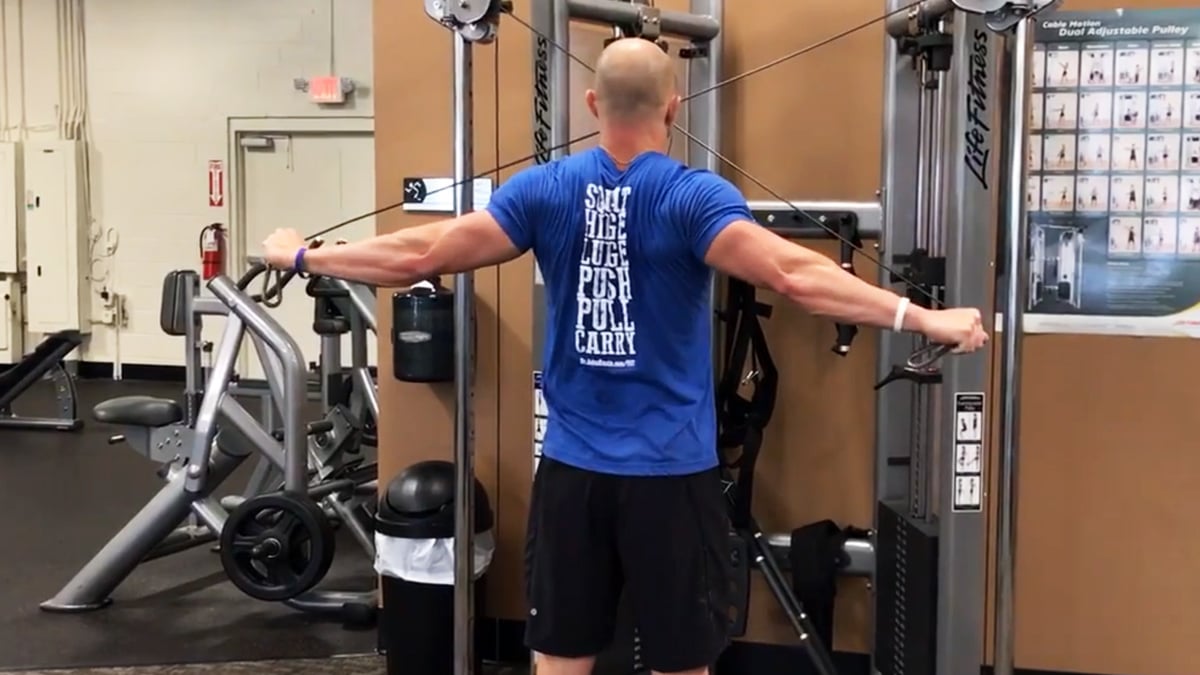
Rear Delt Cable Fly for Shoulder Development?
Frequently Asked Questions about Rear Delt Cable Fly
What is a Rear Delt Cable Fly?
The rear delt cable fly is an isolation exercise aimed at strengthening the posterior deltoids, or rear shoulder muscles. Utilizing a cable machine, this exercise encourages steady tension while providing a full range of motion. Ideal for targeting muscles that are often neglected in regular workouts, the rear delt cable fly can significantly improve shoulder stability and posture.
How Do I Perform a Rear Delt Cable Fly Correctly?
To correctly perform a rear delt cable fly, start by positioning the cables at shoulder height. Grasp each handle with an overhand grip and step back to create tension. Keeping your elbows slightly bent, pull both handles outward and backward in an arc until your arms align with your shoulders. Make sure to squeeze your shoulder blades together at the peak of the movement. Return to the starting position in a controlled motion for one repetition.
What Are the Benefits of Including This Exercise in My Routine?
Incorporating the rear delt cable fly into your workout routine offers various benefits. It precisely targets the rear deltoids, improving muscle balance in the shoulders. This boost in muscle symmetry can prevent potential injuries, enhance athletic performance, and support better posture. Furthermore, regular performance can contribute to an aesthetically pleasing look, particularly crucial for bodybuilders.
How Many Repetitions and Sets Should I Do?
The ideal number of repetitions and sets can vary based on experience level and fitness goals. Typically, performing 3 to 4 sets of 8 to 12 repetitions is effective for muscle growth. Beginners might start with fewer sets and reps to focus on proper form, while seasoned athletes might increase the volume to challenge their muscle endurance.
Is Rear Delt Cable Fly Suitable for Beginners?
Yes, the rear delt cable fly is appropriate for beginners. However, it’s essential to start with a lightweight to master the correct form to prevent injuries. Using a slow and controlled motion enables the understanding of muscle engagement throughout the exercise. Consulting with a fitness professional can also provide personalized guidance and ensure the exercise is performed safely.
Can I Use Alternatives If I Don’t Have Access to a Cable Machine?
Absolutely! If a cable machine is not available, resistance bands or dumbbells can serve as effective alternatives. With resistance bands, the setup mimics the cable fly by anchoring the bands and performing the same motion. Dumbbell reverse flyes are another excellent substitute, wherein you lean forward and lift dumbbells out to the side, relying on gravity rather than machine tension.
What Common Mistakes Should I Avoid?
A prevalent mistake is using too much weight, which can compromise form and lead to injury. Flaring the elbows excessively or allowing them to lock are more errors to avoid. Maintain a slight bend to ensure targeted engagement. Additionally, avoid using momentum; this can reduce the exercise’s efficacy and inhibit muscle growth.
How Can I Incorporate This Exercise into My Workout Routine?
Rear delt cable fly can be included as part of a comprehensive shoulder day routine or woven into a back workout session. Given its isolative focus, it often follows compound exercises like the overhead press or pull-up. Designing a balanced workout regimen ensures muscle groups are well-coordinated for overall strength development.
Does This Exercise Help With Posture?
Yes, regular practice of rear delt cable fly can help improve posture. This exercise targets the rear deltoids and upper back muscles, complementing the often overactive chest and front shoulder muscles. A well-balanced muscle profile mitigates rounded shoulders and forward head posture, contributing to an upright and confident appearance.
FREE SHIPPING
CLICK HERE!
HOT PROMOTIONS!




ZPHC Winstrol Stanozolol 10mg x 100 Tablets

Original price was: $ 99.00.$ 79.00Current price is: $ 79.00.





[ratemypost]
By addressing these common questions, you can integrate the rear delt cable fly more effectively into your fitness journey, leveraging its potential for muscle growth and injury prevention. Understanding these key aspects allows for better planning and execution of your routine. #faq #stayfit #bodybuilding