

Understanding the Concept of tan 0: A Beginner’s Guide
Frequently Asked Questions about Tan 0
What is Tan 0 in Trigonometry?
In trigonometry, Tan 0 refers to the tangent of a 0-degree angle, which equals 0. The tangent function represents the ratio of the opposite side to the adjacent side in a right triangle. At 0 degrees, this ratio becomes 0 because the opposite side’s height is zero.
Why is Tan 0 Important in Mathematics?
Tan 0 is critical in mathematics because it forms the basis for understanding how the tangent function behaves. It helps in solving various trigonometric equations, simplifying expressions, and understanding the behavior of waves and oscillatory motion in physics.
How Do You Calculate the Value of Tan 0?
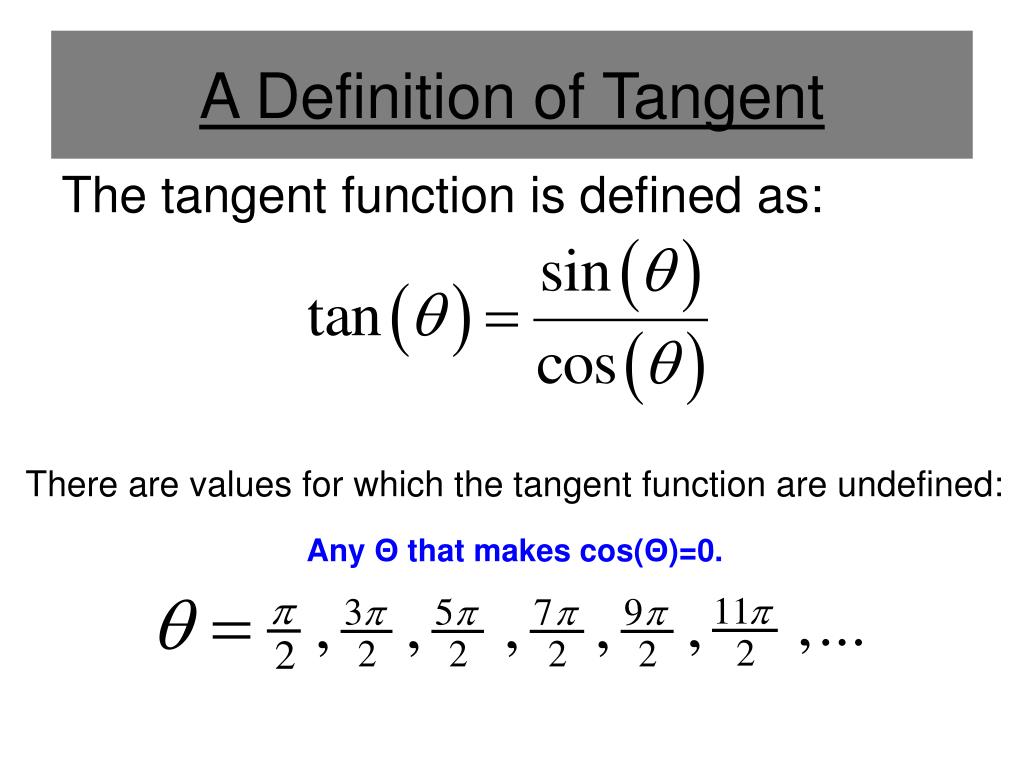
To calculate Tan 0, you can use the formula for tangent: (\text{tan}(\theta) = \frac{\text{opposite side}}{\text{adjacent side}}). At 0 degrees, the opposite side’s length is zero, resulting in a calculation of 0.
Can Tan 0 be Applied in Real-Life Situations?
Yes, Tan 0 finds applications in various fields. In construction, it can determine slopes and inclines. Meanwhile, in physics, it assists in modeling wave patterns and understanding the behavior of pendulums and oscillations.
How Does Tan 0 Relate to Other Trigonometric Functions?
Tan 0 relates closely to other trigonometric functions like sine and cosine. Since Tan 0 equals ( \frac{\text{sin}(0)}{\text{cos}(0)} ) and we know that (\text{sin}(0) = 0) and (\text{cos}(0) = 1), the value also ends up being 0. This relationship helps in forming identities and solving more complicated trigonometric problems.
Are There any Graphical Representations of Tan 0?
On a unit circle, Tan 0 is represented at the point where the angle measure is 0 degrees. The tangent graph intersects the origin at this point, illustrating that the tangent of 0 is indeed 0. This graphical representation helps visually understand the concept.
What Mistakes Should Be Avoided Regarding Tan 0?
One common mistake is forgetting that Tan 0 equals 0 and not infinity. Infinity occurs in the tangent graph when approaching 90 degrees (or (\frac{\pi}{2}) radians), not at 0 degrees. Remembering this distinction is crucial when working with trigonometric identities and equations.
Does Tan 0 have any Limitations?
Tan 0 itself has no limitations, but its applications may be restricted based on context. For example, in complex problem-solving scenarios, Tan 0 might not provide sufficient information alone. It’s typically used alongside other trigonometric functions to provide a comprehensive understanding.
How Often is Tan 0 Used in Academic Settings?
Tan 0 is frequently employed in mathematical coursework, particularly in subjects like calculus, algebra, and trigonometry. It’s foundational for students learning wave patterns, circular motion, and angles.
What are Some Exercises to Understand Tan 0 Better?
To grasp Tan 0 better, practice solving trigonometric equations involving different angles. Experiment with the unit circle to see how it connects to other trigonometric concepts. Real-world problems, such as calculating the angle of a slope or decline using Tan 0, also help reinforce learning.
FREE SHIPPING
CLICK HERE!
HOT PROMOTIONS!




Beligas SARMs ACP-105 ACP 10mg 50 tablets

Original price was: $ 130.00.$ 109.00Current price is: $ 109.00.



PAY 2 GET 3 🔥| Beligas Oxytocin 2mg 1 + 1 BA Liquid

Original price was: $ 99.00.$ 89.00Current price is: $ 89.00.

[ratemypost]
For more insights, check out tutorials or resources that delve into trigonometric analysis and applications in physics and engineering. Practicing these concepts ensures a solid understanding and ability to apply them in different contexts.