

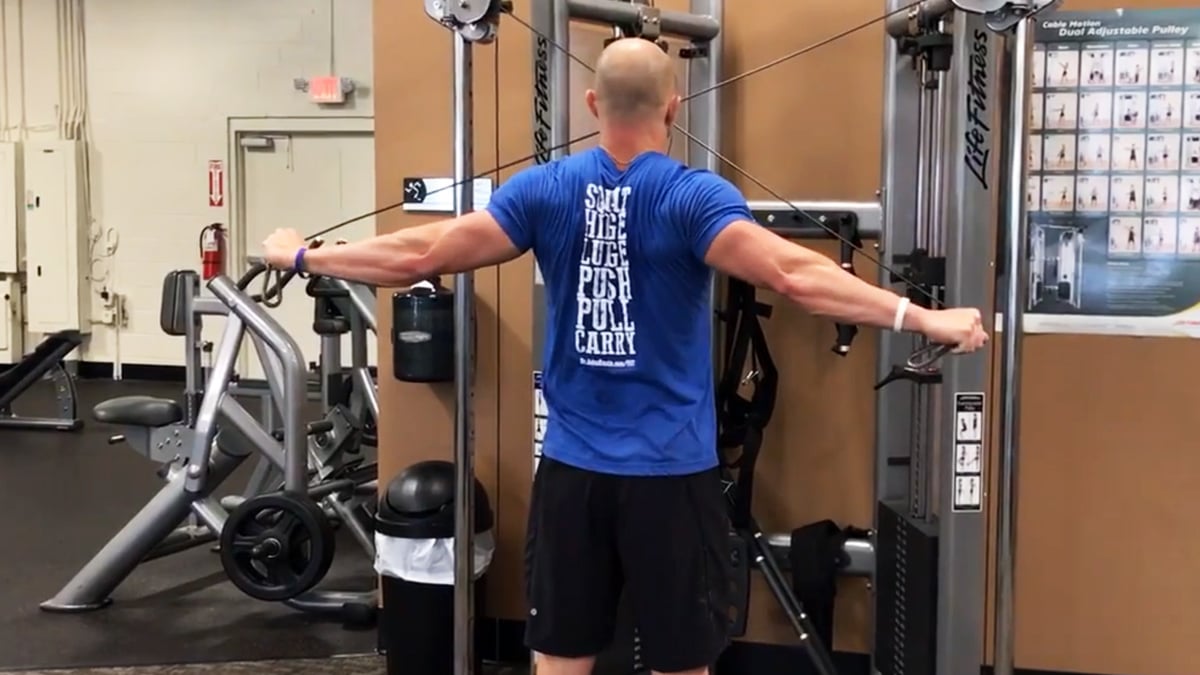
What is a Rear Delt Fly Cable Exercise?
FAQ about Rear Delt Fly Cable
What is a Rear Delt Fly Cable?
The rear delt fly cable is an exercise designed to target the rear deltoids, which are the muscles located at the back of your shoulders. This exercise is popular for those looking to enhance shoulder stability, improve posture, and build upper body strength. It is performed using a cable machine, which allows for continuous tension throughout the movement.
How Do You Perform a Rear Delt Fly Cable?
To perform the rear delt fly cable exercise, set the cable machine with the pulleys at shoulder height and attach D-handle attachments. Stand in the center of the machine, hold a handle in each hand, and step back slightly to put tension on the cables. With arms slightly bent, pull the handles outward and backward in a wide arc, focusing on squeezing your shoulder blades together. Slowly return to the starting position and repeat.
What are the Benefits of Rear Delt Fly Cable?
The primary benefits of the rear delt fly cable include strengthening the rear deltoids, enhancing overall shoulder stability, and improving posture. It also assists in developing a balanced physique by ensuring that the back of the shoulders is adequately targeted, promoting symmetrical muscle growth.
Can Beginners Perform Rear Delt Fly Cable?
Yes, beginners can perform the rear delt fly cable exercise, but it is essential to start with a lighter weight to ensure proper form and reduce the risk of injury. Beginners should focus on mastering the movement pattern and progressively increase the weight as they build strength and confidence.
How Does Rear Delt Fly Cable Compare to Dumbbell Variants?
The rear delt fly cable offers some advantages over dumbbell variants, such as maintaining constant tension on the muscles throughout the movement and allowing for a more controlled and isolated exercise. However, using dumbbells can offer more freedom of movement and can be a convenient option when a cable machine is unavailable.
How Often Should You Include Rear Delt Fly Cable in Your Workout?
For balanced shoulder development and to avoid overtraining, it is recommended to include the rear delt fly cable exercise in your workout routine 1-2 times per week. Integrating this exercise with compound movements like shoulder presses or rows can help ensure comprehensive shoulder training.
Can Rear Delt Fly Cable Prevent Shoulder Injuries?
While no exercise can entirely prevent injuries, strengthening the rear deltoids with the rear delt fly cable can contribute to improved shoulder stability and mobility, potentially reducing the likelihood of injury. Ensuring a balanced workout that targets all shoulder muscles is key to preserving shoulder health.
Is Rear Delt Fly Cable Suitable for Rehabilitation?
The rear delt fly cable can be suitable for rehabilitation under the guidance of a physical therapist. The continuous tension and controlled movement can aid in rebuilding strength and mobility, but it must be performed with proper technique and an appropriate weight to prevent further injury.
What Muscle Groups Do Rear Delt Fly Cable Target Besides the Rear Deltoids?
In addition to the rear deltoids, the rear delt fly cable also engages the upper back muscles, including the trapezius and rhomboids. This makes it an excellent exercise for enhancing upper back strength and improving overall posture.
Are There Variations of the Rear Delt Fly Cable?
Yes, there are variations of the rear delt fly cable, such as the seated rear delt fly cable and the bent-over rear delt fly cable. These variations can be utilized to alter the exercise’s difficulty, target different angles of the muscles, and add variety to your workout routine.
FREE SHIPPING
CLICK HERE!
HOT PROMOTIONS!


10 Pack | LQ LAB PEPTIDES | Retatrutide 5mg/vial

Original price was: $ 359.00.$ 269.00Current price is: $ 269.00.

SUSTANON 300MG BLEND AXIOM 10ML

Original price was: $ 118.00.$ 99.00Current price is: $ 99.00.



TRENBOLONE ENANTHATE 200MG 10ML AUCTUS

Original price was: $ 140.00.$ 119.00Current price is: $ 119.00.
[ratemypost]