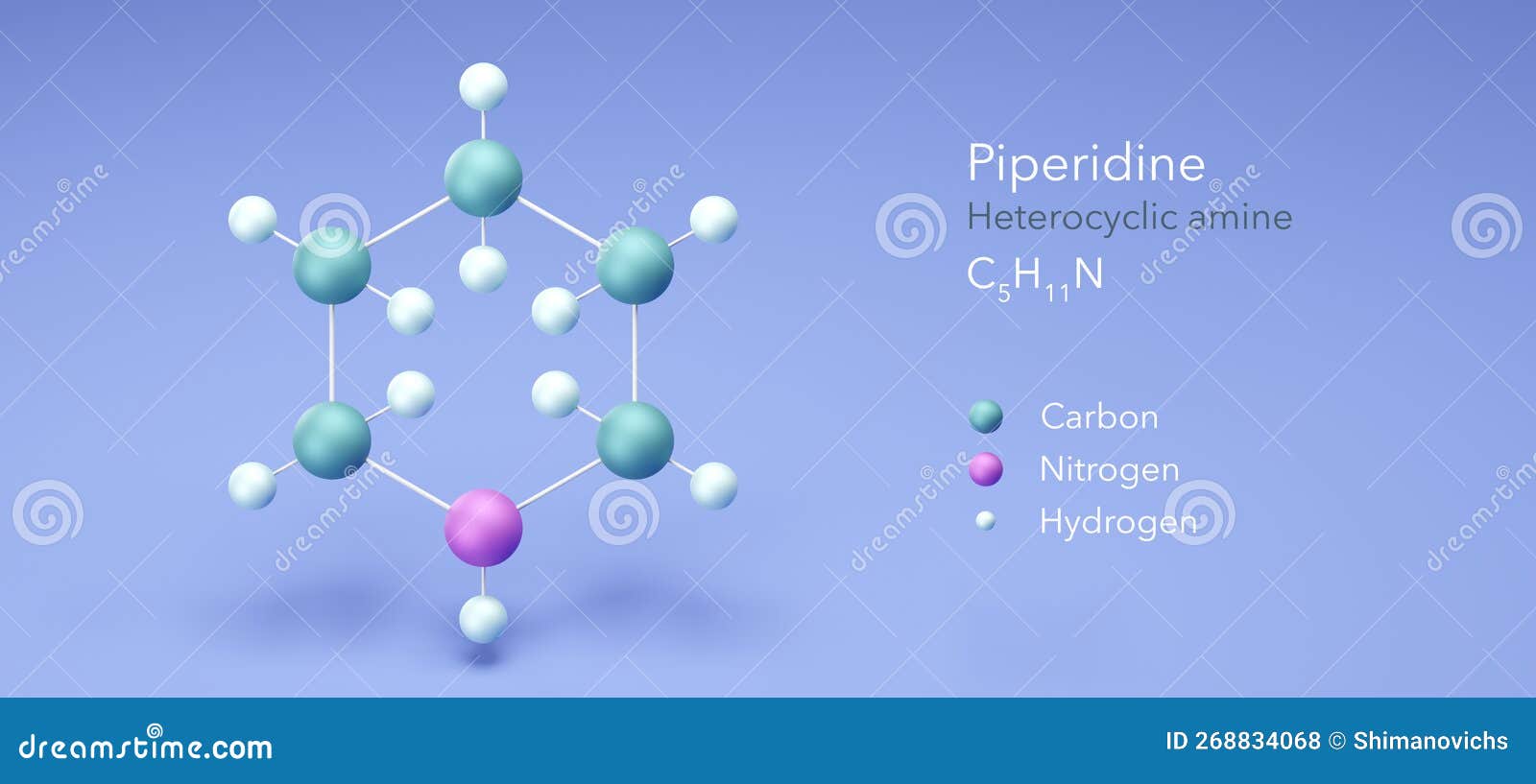
What is piperidine?
What is piperidine, and how is it structured in terms of its chemical composition? Additionally, could you explain its significance in the field of organic chemistry and its applications in pharmaceuticals or other industries? Are there any notable reactions or properties of piperidine that are particularly interesting or important for its use in various chemical processes?
Answer
Piperidine is a heterocyclic organic compound characterized by a six-membered ring containing five carbon atoms and one nitrogen atom. It is an alicyclic amine, with the molecular formula C5H11N. Piperidine is colorless to pale yellow in appearance and has a distinctive ammonia-like odor. This compound is highly soluble in water and organic solvents.
Piperidine serves as a building block in organic chemistry and has numerous applications in the pharmaceutical, agricultural, and chemical industries. It is utilized in the synthesis of various pharmaceuticals, including antipsychotics, antihistamines, analgesics, and local anesthetics. Additionally, piperidine derivatives are important in the development of agrochemicals such as pesticides and herbicides.
The compound is also used as a reagent in chemical synthesis, where it functions as a solvent and a catalyst. Piperidine can engage in various chemical reactions, including alkylation and acylation, making it valuable for creating complex organic molecules.
In terms of safety, piperidine is considered toxic, and precautionary measures should be followed when handling it. It can cause irritation to the skin, eyes, and respiratory system, and long-term exposure may have adverse health effects.
For those interested in exploring related projects or learning more, please visit our portfolio: 24-7.is/portfolio/.
For more information, consider visiting the following external resources: