Breaking Down the Nitrate Formula: Its Chemistry and Applications
TABLE OF CONTENTS

Nitrate is a fundamental compound in chemistry, playing a vital role in various biological and environmental processes. Its significance ranges from agriculture as a critical component of fertilizers to being a concern in water quality management due to its potential environmental and health impacts. This article delves into the chemical formula for nitrate, its properties, and its applications.
The Chemical Formula for Nitrate
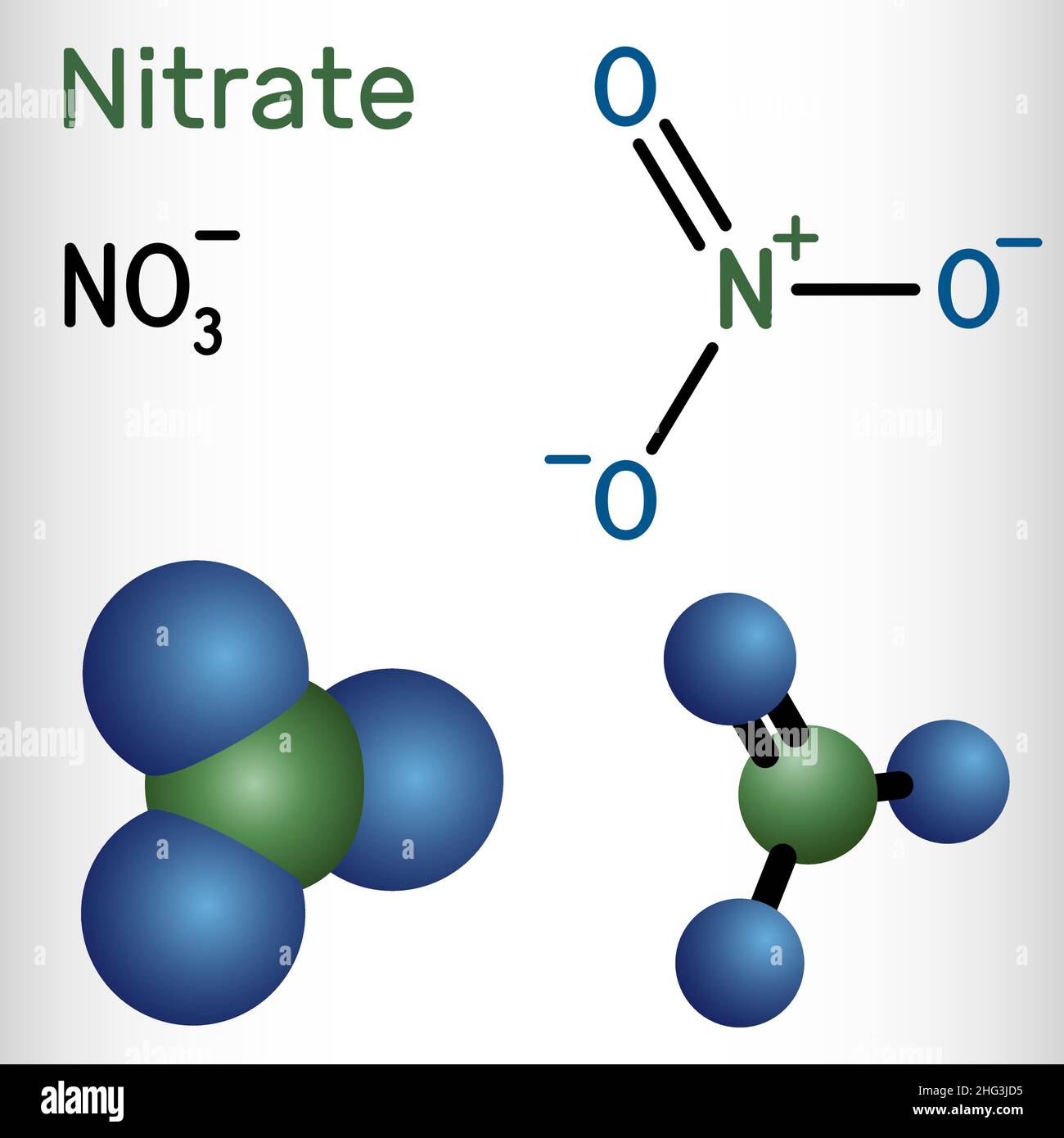
The chemical formula for nitrate is NO₃⁻. This denotes a polyatomic ion comprising one nitrogen atom (N) covalently bonded to three oxygen atoms (O), carrying an overall negative charge. Nitrate’s structure allows it to participate actively in biological processes, such as the nitrogen cycle, and present as an essential compound in various chemical reactions.
Structure and Properties
Nitrate ions are trigonal planar, meaning the nitrogen atom is centrally located, with the three oxygen atoms equally spaced around it. This symmetry contributes to the ion’s solubility and stability in water, making it highly reactive and easily assimilated by plants. The ability to quickly dissolve in water and move through soil supports its primary use in agriculture, as plants absorb nitrogen in the form of nitrate to aid in growth and development.
Applications in Agriculture
In the agricultural sector, the formula for nitrate reflects its importance as a fertilizer component. Crops require nitrogen for growth, and nitrate represents a readily available nitrogen source. When applied properly, nitrate-based fertilizers boost crop yields and improve food production efficiency. However, excess nitrate use can lead to water pollution and eutrophication, where water bodies receive excess nutrients, leading to oxygen depletion and aquatic life harm.
Environmental Impact
The formula for nitrate also plays a critical role in environmental studies. While essential for plant growth, excessive nitrate in water systems can cause serious environmental issues. High levels of nitrates in drinking water are a concern for human health, leading to conditions such as methemoglobinemia or “blue baby syndrome” in infants. This highlights the importance of monitoring and managing nitrate levels in agricultural runoff and water supplies.
Conclusion
The formula for nitrate, NO₃⁻, is a small but significant part of broader chemical, agricultural, and environmental systems. While its role as a nutrient in plant growth is undeniable, managing its levels is crucial to prevent environmental degradation and health risks. Understanding its chemical nature and impacts helps in designing better agricultural practices and environmental management strategies.
BIG SALE | FAST SHIPPING
HOT PROMOTIONS!
ZPHC UltraMix 10ml MultiUse Vial 1ml = 250mg

Original price was: $ 255.00.$ 179.00Current price is: $ 179.00.







FAQs
What is the importance of the formula for nitrate in agriculture?
Nitrate (NO₃⁻) is vital in agriculture as it provides an easily absorbable form of nitrogen for plants, aiding in their growth and improving crop yields when used in fertilizers.
How does the formula for nitrate impact water quality?
High concentrations of nitrate in water can lead to pollution and eutrophication, harming aquatic ecosystems and posing health risks to humans who consume contaminated water (more information available on United States Geological Survey)
Are there alternatives to using nitrate-based fertilizers?
Yes, alternatives include organic fertilizers and the use of sustainable farming practices that reduce reliance on chemical fertilizers, minimizing the environmental impact. More information can be found at Food and Agriculture Organization of the United Nations.
By understanding the complex roles that nitrate plays, we can better manage its applications and reduce negative environmental and health impacts.
Nitrate is an important polyatomic ion with the chemical formula NO₃⁻. It is composed of one nitrogen atom centrally bonded to three oxygen atoms. The nitrogen atom forms a single covalent bond with one of the oxygen atoms and double covalent bonds with the other two oxygen atoms, creating a resonance structure that allows the charge to be evenly distributed across the ion. Nitrate is a common component of fertilizers and explosives, playing a vital role in the nitrogen cycle and agricultural productivity. Due to its high solubility in water, nitrate can easily leach into water supplies, posing potential environmental and health risks if not managed properly. Its presence in drinking water is regulated due to concerns about conditions such as methemoglobinemia or “blue baby syndrome,” which can occur in infants.