Seated Overhead Press: Techniques and Tips for Maximum Gains
TABLE OF CONTENTS

The seated overhead press is a highly effective strength training exercise that targets the shoulders, triceps, and upper chest. As a compound movement, it plays a crucial role in building upper body strength and muscle mass. This versatile press can be done with a barbell or dumbbells, making it adaptable for different levels of fitness enthusiasts.
Benefits of Performing the Seated Shoulder Exercise
Engaging in this exercise offers multiple advantages. Firstly, it provides excellent shoulder development. By isolating the shoulders and stabilizing the core, it effectively builds muscle mass in the deltoids. Additionally, since the exercise is performed while seated, it minimizes the involvement of the lower body, focusing the work on the upper body muscles.
Another significant benefit of this seated shoulder movement is improved posture. The exercise requires you to maintain an upright position with a straight back, which can strengthen the muscles responsible for good posture. Moreover, it helps increase shoulder stability and flexibility, which are essential for daily activities and athletic performance.
How to Perform the Seated Weight Press Correctly
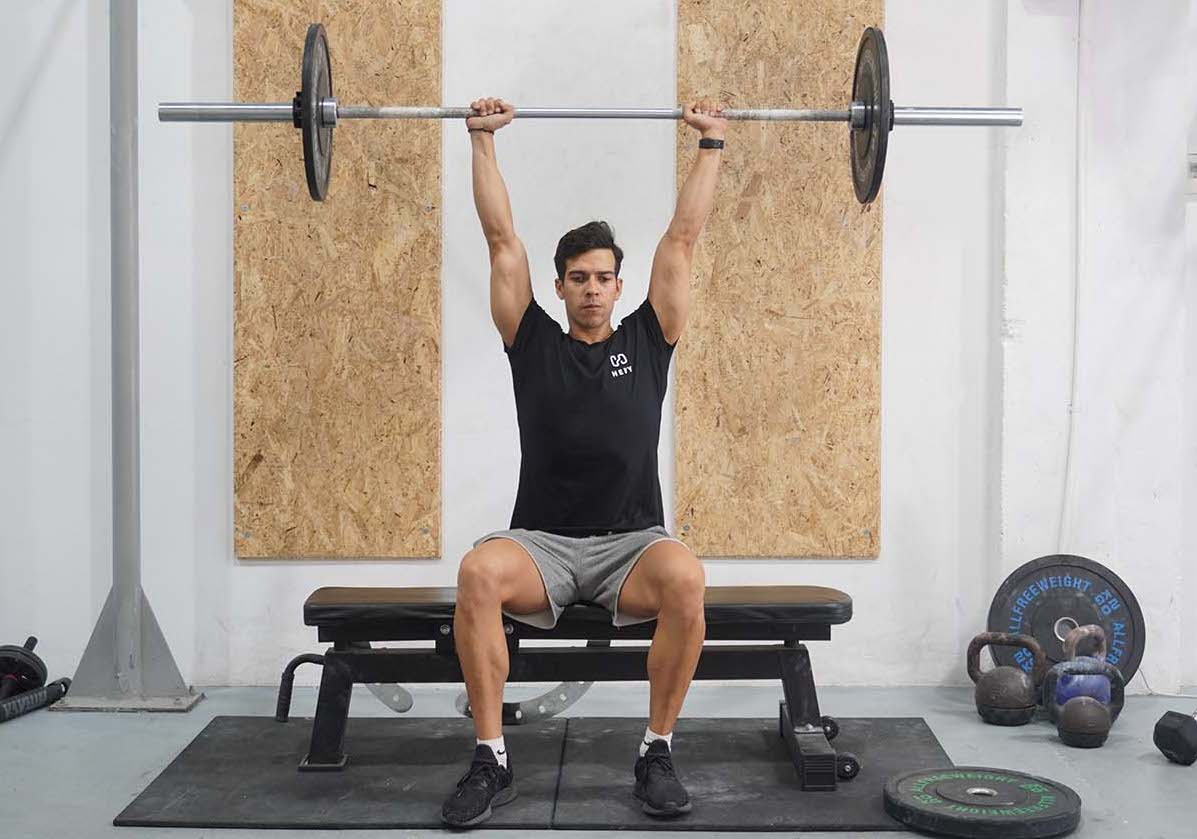
Executing the seated press correctly is important to reap its full benefits and avoid injury. Begin by adjusting a bench so that it has back support. Sit with your feet flat on the ground, and your back firmly pressed against the bench. Hold the barbell with an overhand grip, slightly wider than shoulder-width apart. If you’re using dumbbells, hold them at shoulder height.
Start the movement by engaging your core for stability. Press the weight upward until your arms are fully extended, but do not lock your elbows. Lower the weight back to the starting position with controlled movements. It’s crucial to avoid leaning back excessively or arching your lower back, as this can lead to potential injuries.
Tips for Maximizing the Benefits of the Sit-Down Press
To get the most from the sit-down shoulder press, consider incorporating it into a balanced workout routine. Combine it with other exercises targeting different muscle groups for overall strength development. Pay attention to your breathing – exhale as you press the weight up and inhale as you lower it.
Adjust your routine by varying the weight and repetition range. For muscle endurance, aim for lighter weights and higher repetitions. To increase strength, use heavier weights with fewer reps. Always prioritize form over the amount of weight lifted to prevent injuries.
BIG SALE | FAST SHIPPING
HOT PROMOTIONS!




ZPHC UltraMix 1ml amps x 10 amps - 1ml = 250mg

Original price was: $ 259.00.$ 179.00Current price is: $ 179.00.
ZPHC UltraMix 10ml MultiUse Vial 1ml = 250mg

Original price was: $ 255.00.$ 179.00Current price is: $ 179.00.

CROWX 👑 CLOMIROW 50 Mg / 50 Tabs ( Clomid )

Original price was: $ 79.00.$ 69.00Current price is: $ 69.00.
Beligas 10ml Vial Testosterone NPP Blend 150mg

Original price was: $ 119.00.$ 99.00Current price is: $ 99.00.

Conclusion
The seated overhead press is a fundamental exercise for anyone looking to enhance their upper body strength and definition. Its emphasis on isolating the shoulders and stabilizing the core makes it a vital component of a well-rounded fitness regimen. By performing the exercise with correct form and incorporating it wisely into your workouts, you will build both strength and confidence.
FAQs
- What muscles does the seated shoulder press target?
The seated press focuses on the shoulders, triceps, and upper chest.
- Can beginners perform this exercise?
Yes, beginners can start with light weights and focus on proper form.
- How often should I include the seated weight press in my routine?
It can be included 2-3 times a week, allowing rest days for muscle recovery.
- What muscles does the seated shoulder press target?
The seated overhead press is a strength-training exercise focused on enhancing upper body muscle definition, particularly targeting the shoulders, triceps, and upper chest. Performed typically with a barbell or dumbbells, the practitioner is seated, often on a bench with back support, to maintain an upright posture while reducing the risk of leaning back excessively, which can strain the lower back. This position emphasizes the deltoid muscles and helps isolate the shoulder movement, promoting muscular endurance and hypertrophy. Proper form entails engaging the core throughout the lift, using a full range of motion from the shoulders to just before arm lockout overhead, and maintaining controlled breathing patterns. As a compound movement, the seated overhead press not only develops strength but also improves joint stability and can be incorporated into various fitness routines as a foundational upper-body exercise.