Peptide Bonds: The Essential Links in Protein Synthesis
TABLE OF CONTENTS

Peptides and proteins are fundamental components of all living organisms, playing crucial roles in biological processes. Central to the formation of these biomolecules is the peptide bond, a unique type of covalent bond that links amino acids together. This article delves into the structure, formation, and significance of peptide bonds, providing a comprehensive understanding of this essential chemical linkage.
The Chemistry of Peptide Bonds
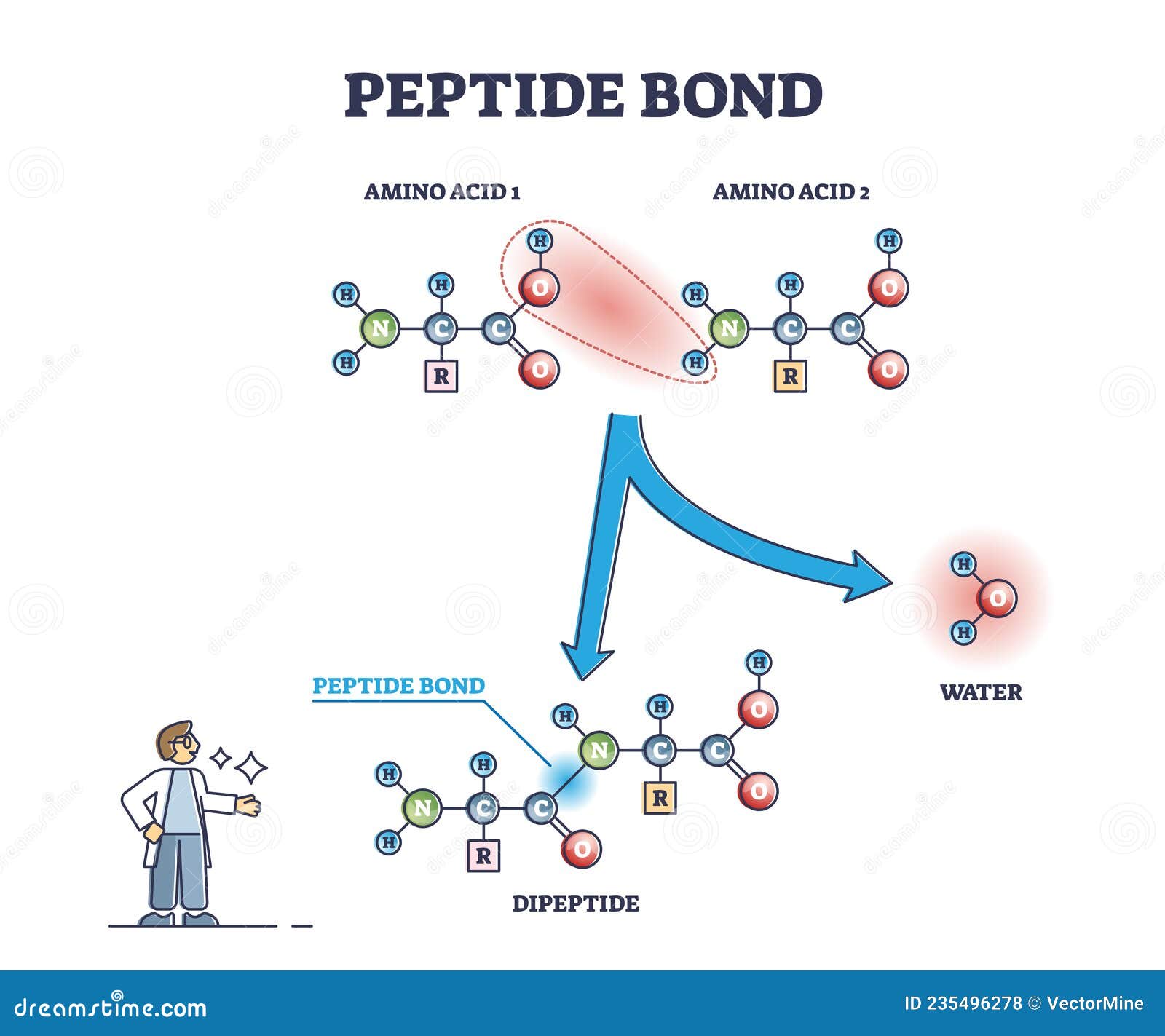
Peptide bonds are formed through a dehydration synthesis reaction, which involves the removal of a water molecule. The bond occurs between the carboxyl group of one amino acid and the amino group of another. This linkage results in a covalent bond between the nitrogen and the carbonyl carbon, creating a characteristic planar structure that is integral to the stability and function of protein molecules.
The peptide bond has partial double-bond character due to resonance, which restricts rotation around the bond and gives the protein backbone a rigid and stable configuration. This rigidity is critical in maintaining the specific 3D shape necessary for protein function.
The Role of Peptide Bonds in Protein Structure
Peptide bonds are pivotal in determining a protein’s primary structure, which is the specific sequence of amino acids in the polypeptide chain. This primary structure ultimately dictates the higher levels of protein structure, including secondary, tertiary, and quaternary structures. The precise arrangement and orientation of peptide bonds influence protein folding, stability, and function.
Proper protein folding is essential for the biological activity of proteins. Misfolding, often resulting from faulty peptide bonds, can lead to diseases such as Alzheimer’s and Parkinson’s. Therefore, understanding peptide bond formation and stability is of great importance in the field of biochemistry and molecular biology.
Conclusion on the Importance of Peptide Bonds
In summary, peptide bonds are the fundamental links that hold the building blocks of life together, namely proteins. Their unique chemical properties are crucial for stabilizing protein structure and function. Studying peptide bonds offers insights into protein design and synthesis, paving the way for innovations in drug development, biotechnology, and therapeutic interventions.
FAQs on Peptide Bonds
What is a peptide bond?
A peptide bond is a covalent bond that forms between the carboxyl group of one amino acid and the amino group of another, resulting in a water molecule being released.
Why are peptide bonds important?
They are vital for linking amino acids together to form proteins, which are essential for numerous biological functions in living organisms.
How does the structure of a peptide bond affect protein shape?
Due to the resonance of peptide bonds, they have partial double-bond characteristics, restricting rotation and thus contributing to the rigid and stable structure of proteins.
Can peptide bonds be broken?
Yes, peptide bonds can be hydrolyzed, or broken down, by enzymatic actions or under extreme pH and temperature conditions.
For more insights on peptide bonds and their applications, explore our expert resources and articles.
BIG SALE | FAST SHIPPING
HOT PROMOTIONS!




CROWX 👑 CLOMIROW 50 Mg / 50 Tabs ( Clomid )

Original price was: $ 79.00.$ 69.00Current price is: $ 69.00.




Peptide bonds are covalent chemical bonds that form between the carboxyl group of one amino acid and the amino group of another, serving as the backbone of protein structures. This bond is created through a dehydration synthesis reaction, where a molecule of water is released as the carboxyl and amino groups join, forming a characteristic -CO-NH- linkage. As the primary linkage in proteins, peptide bonds are crucial for maintaining the integrity and function of these biomolecules. They are planar and exhibit partial double-bond character due to resonance, which restricts rotation around the bond and contributes to the stability of the protein’s secondary and tertiary structures. The sequence of amino acids connected by peptide bonds determines the protein’s unique properties and functions, making them central to a vast array of biological processes. Understanding the nature and behavior of peptide bonds is essential in fields like biochemistry and molecular biology, where protein function and structure are key areas of study.