The Gemelli Muscles: Anatomy and Function Explained
TABLE OF CONTENTS

The hip joint plays a crucial role in offering both stability and flexibility to the lower body. Among the muscles that contribute to its function are the gemelli muscles. Though lesser-known, these muscles are vital in ensuring coordinated and smooth movement of the hip and thigh.
Anatomy of the Gemelli Muscles
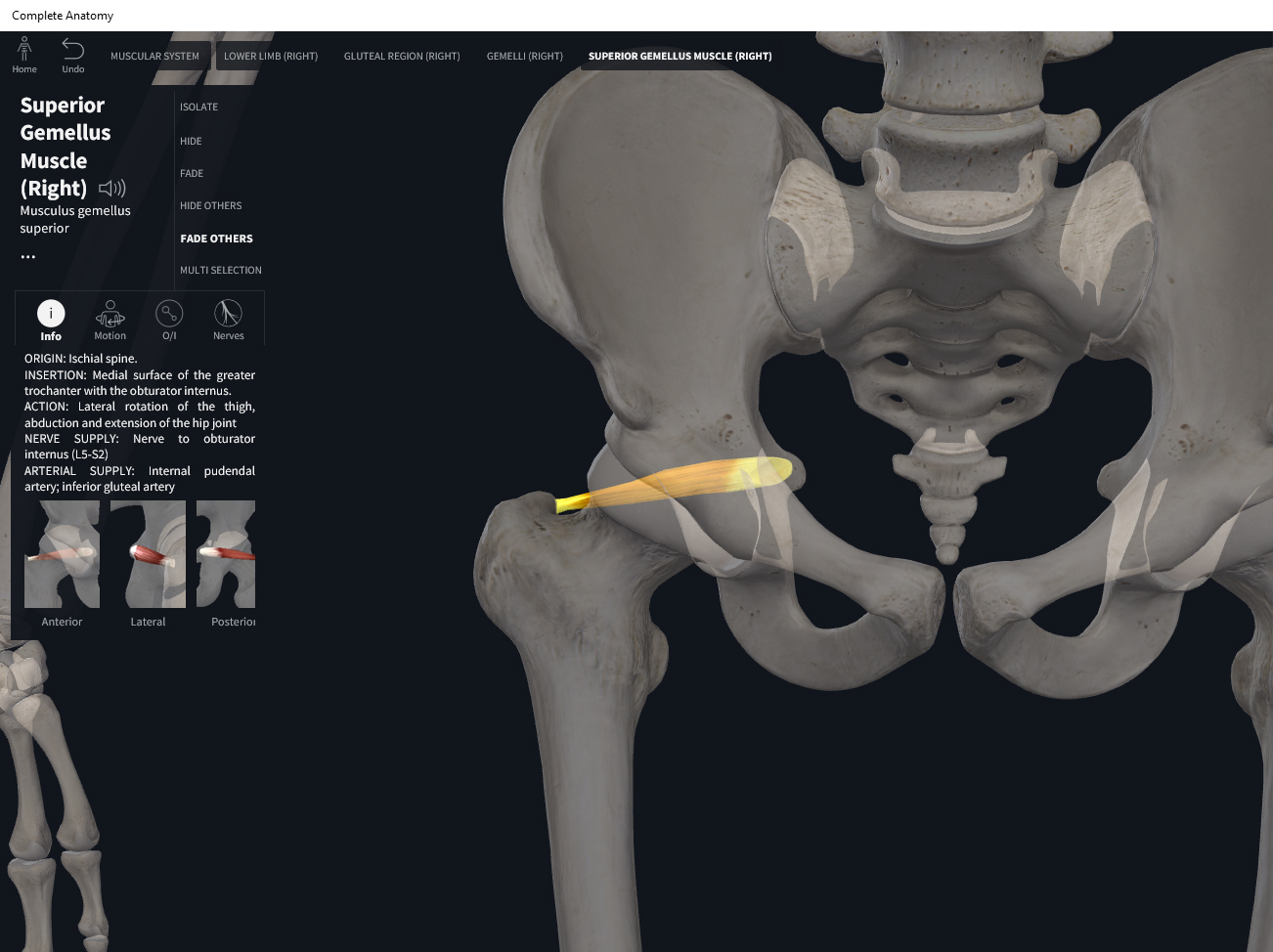
The gemelli muscles consist of two small muscles situated in the posterior aspect of the hip. These muscles are the superior gemellus and the inferior gemellus. Positioned near the hip joint, they work in conjunction with the larger gluteal muscles to stabilize the pelvis and provide lateral rotation to the thigh.
Superior Gemellus
The superior gemellus finds its origin at the ischial spine, a bony projection in the pelvis. It attaches to the medial surface of the greater trochanter of the femur alongside the obturator internus muscle. This muscle assists in laterally rotating the hip and stabilizing the joint during various movements.
Inferior Gemellus
The inferior counterpart of the gemellus muscles originates from the ischial tuberosity, located just below the superior muscle’s origin. It, too, attaches to the greater trochanter with the obturator internus. Both gemelli aid hip stabilization, particularly during weight-bearing activities.
Function of the Gemelli Muscles
In synergy with other deep hip muscles, the gemelli are primarily involved in the lateral rotation of the thigh. This function is crucial in allowing efficient leg movements such as walking, running, and balancing. Moreover, their role in stabilizing the hip joint makes them essential for rugged and uneven terrains, ensuring the pelvis remains steady.
The collaboration between the gemelli and other muscles like the obturator internus, piriformis, and quadratus femoris is vital for the intricate movements of the hip. They help distribute the applied forces evenly across the joint, reducing potential wear and tear. For further details on muscle functions and anatomy, you can visit WebMD or explore educational resources at the National Institutes of Health.
Conclusion
Though small in size, the gemelli muscles play a pivotal role in the proper functioning of the hip joint. By facilitating lateral rotation and stabilization, they help ensure the efficient movement and support of the lower body. Understanding their significance can aid in better diagnostics and rehabilitation practices for hip-related issues.
FAQs
What activities engage the gemelli muscles?
Activities that involve extensive hip movement, such as walking, running, climbing, and dancing, engage these muscles effectively.
Can strengthening the gemelli muscles help improve hip stability?
Yes, targeted exercises can enhance the strength of the gemelli, contributing to overall hip stability and function.
Are there common injuries associated with the gemelli muscles?
While less common, strains or tears can occur, typically due to overexertion or direct trauma. Rest, physiotherapy, and strengthening exercises are often recommended for recovery.
How can I stretch my gemelli muscles?
Incorporating hip rotation and flexion exercises, such as seated or lying hip rotations, can help stretch these muscles and maintain flexibility.
BIG SALE | FAST SHIPPING
HOT PROMOTIONS!


ZPHC UltraMix 10ml MultiUse Vial 1ml = 250mg

Original price was: $ 255.00.$ 179.00Current price is: $ 179.00.



FIERCE CLOMID 50MG 50CAPS

Original price was: $ 129.00.$ 119.00Current price is: $ 119.00.
Fierce nandrolone decanoate 300 / ml 10ml

Original price was: $ 131.00.$ 119.00Current price is: $ 119.00.

The gemelli muscles, consisting of the superior gemellus and inferior gemellus, are small, paired muscles located in the gluteal region of the human body. These muscles play a significant role in stabilizing and facilitating the lateral rotation of the hip joint. The superior gemellus originates from the ischial spine, while the inferior gemellus originates from the ischial tuberosity, and both muscles insert into the medial surface of the greater trochanter of the femur via the tendon of the obturator internus. They work synergistically with the obturator internus, quadratus femoris, and other lateral rotator muscles to maintain hip stability and allow for the external rotation necessary in complex lower body movements. Their function is crucial not only for actions such as walking, running, and jumping, but also for maintaining proper posture and balance.