
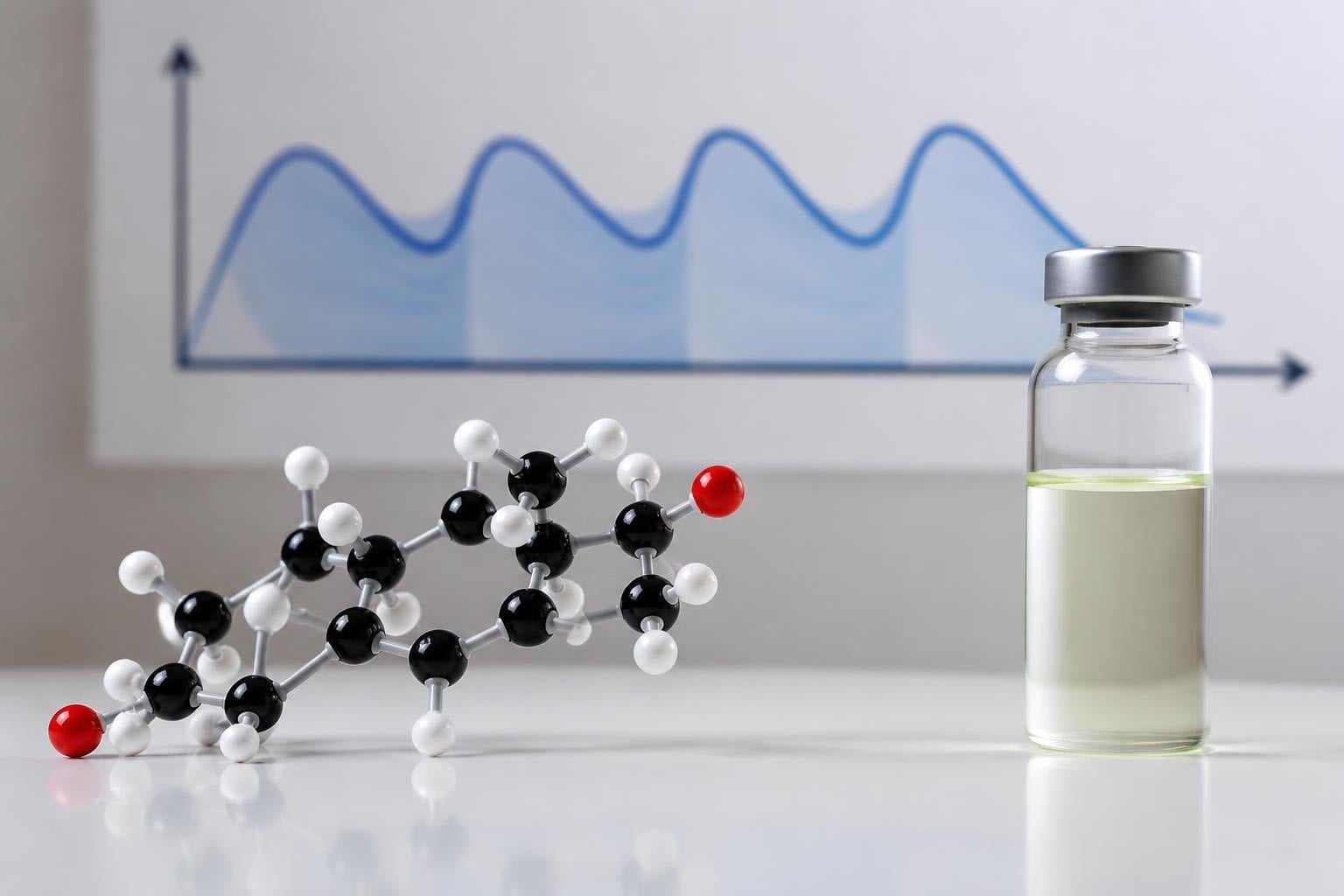
Testosterone Enanthate: Guide to Dosing and Use
Testosterone enanthate represents one of the most widely prescribed and utilized forms of exogenous testosterone available today. As a long-acting ester of testosterone, this injectable formulation has earned its place in both clinical medicine and performance enhancement circles through decades of documented use. Understanding the pharmacological properties, appropriate dosing protocols, and safety considerations surrounding testosterone enanthate is essential for anyone considering or currently using this compound. This comprehensive guide examines the science-backed applications, administration methods, and critical factors that influence outcomes with this testosterone ester.
Pharmacological Profile and Mechanism of Action
Testosterone enanthate functions as a prodrug that delivers bioidentical testosterone to the body following intramuscular injection. The enanthate ester attached to the testosterone molecule serves a crucial purpose: it slows the release of testosterone from the injection depot into the bloodstream. This modification transforms testosterone from a compound that would otherwise clear the system within hours into one that maintains therapeutic levels for days or weeks.
Esterification and Release Kinetics
The seven-carbon enanthate ester creates a lipophilic molecule that dissolves in the oil-based carrier solution used for injection. Once administered intramuscularly, the testosterone enanthate remains at the injection site in an oily depot. Esterase enzymes gradually cleave the enanthate ester from the testosterone molecule, releasing free testosterone into circulation. According to peer-reviewed pharmacokinetic research, the half-life of testosterone enanthate ranges from approximately 4 to 5 days, though individual variation exists based on injection site, depth, and patient-specific factors.
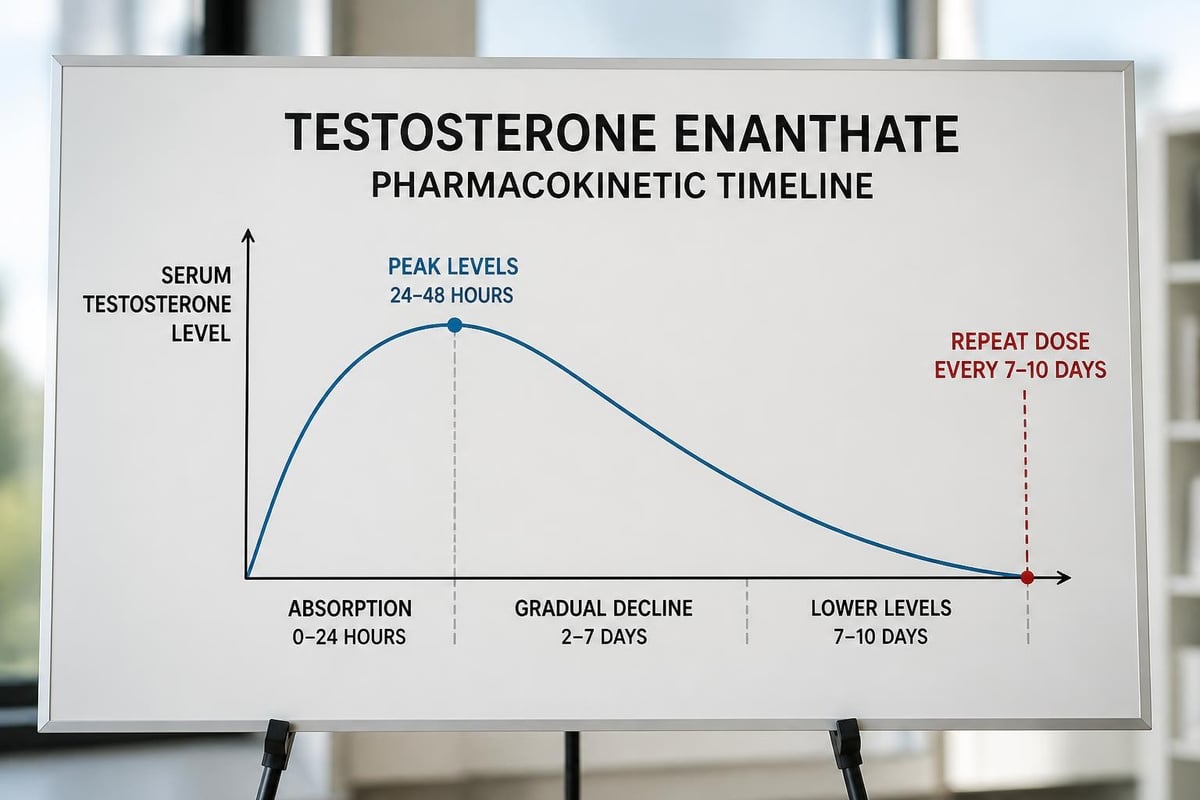
Key pharmacokinetic parameters include:
- Peak serum concentrations typically occur 24 to 48 hours post-injection
- Measurable testosterone elevation persists for 2 to 3 weeks following a single dose
- Steady-state levels achieved after 3 to 4 weekly injections
- Individual absorption rates influenced by injection technique and body composition
The gradual release profile makes testosterone enanthate suitable for less frequent dosing compared to shorter-acting esters, while still providing more stable levels than very long-acting alternatives.
Clinical Applications and Therapeutic Use
The FDA-approved indications for testosterone enanthate center on testosterone replacement therapy for men diagnosed with primary or secondary hypogonadism. Primary hypogonadism results from testicular dysfunction, while secondary hypogonadism stems from hypothalamic or pituitary disorders that reduce gonadotropin secretion. Both conditions manifest with consistently low serum testosterone levels accompanied by clinical signs and symptoms.
Diagnostic Requirements
Proper medical diagnosis requires documented evidence through laboratory testing and clinical evaluation. The Endocrine Society clinical practice guidelines recommend confirming hypogonadism with at least two morning total testosterone measurements below the reference range, combined with symptoms such as reduced libido, erectile dysfunction, decreased energy, or loss of muscle mass.
| Clinical Parameter | Diagnostic Threshold | Testing Protocol |
|---|---|---|
| Total Testosterone | <300 ng/dL | Two morning samples |
| Free Testosterone | Below reference range | Calculated or measured |
| LH/FSH | Varies by type | Single measurement |
| Symptom Assessment | Standardized questionnaire | Clinical interview |
Medical supervision ensures appropriate patient selection and monitoring throughout treatment. Healthcare providers assess cardiovascular risk factors, prostate health, hematocrit levels, and other safety parameters before initiating therapy.
Dosing Protocols and Administration
Standard therapeutic dosing of testosterone enanthate for hypogonadism typically ranges from 50 to 400 mg administered every 2 to 4 weeks via intramuscular injection. Most prescribing physicians favor doses between 100 and 200 mg every 1 to 2 weeks to maintain more consistent serum levels and minimize the peaks and troughs associated with less frequent dosing.
Clinical Trial Dosing Data
Research examining testosterone enanthate during metabolic stress utilized 200 mg weekly in controlled conditions, demonstrating measurable effects on body composition and metabolic parameters. Companion studies evaluating behavioral outcomes employed identical dosing protocols, providing insight into both physiological and psychological responses to this administration schedule.
Common dosing strategies include:
- Traditional protocol: 200-250 mg every 2 weeks
- Modern protocol: 100-125 mg weekly
- Micro-dosing: 50-75 mg twice weekly
- High therapeutic: 150-200 mg weekly
The shift toward more frequent, lower-dose injections reflects growing recognition that stable hormone levels produce superior symptomatic relief with fewer side effects compared to the pronounced fluctuations seen with biweekly or monthly dosing.
Injection Technique Considerations
Proper administration technique significantly influences absorption and patient comfort. Deep intramuscular injection into the gluteal muscles, vastus lateralis, or deltoid (for smaller volumes) ensures appropriate depot formation. Needle length selection depends on body composition, with 1 to 1.5-inch needles appropriate for most patients. Aspiration before injection, while debated, may reduce the risk of inadvertent intravascular administration.

Response Monitoring and Adjustment
Initiating testosterone enanthate therapy requires systematic monitoring to verify appropriate response and identify potential complications. Initial follow-up typically occurs at 3 to 6 months, then annually for stable patients. Laboratory monitoring includes serum testosterone levels, complete blood count, lipid panel, liver function tests, and prostate-specific antigen in men over 40.
The target testosterone range during replacement therapy generally falls between 400 and 700 ng/dL, measured at trough (immediately before the next injection). Levels consistently above or below this range warrant dose adjustment. Some patients require individualized targets based on symptom response and side effect profile.
Individual Variation in Response
Substantial inter-individual variability characterizes testosterone metabolism and receptor sensitivity. Factors influencing response include:
- Baseline testosterone production capacity
- Sex hormone binding globulin (SHBG) levels
- Aromatase enzyme activity
- 5-alpha reductase expression
- Body composition and insulin sensitivity
Patients with higher SHBG concentrations may require higher total testosterone doses to achieve adequate free testosterone levels, while those with elevated aromatase activity face increased estradiol conversion requiring monitoring and potential intervention.
Safety Profile and Risk Management
Like all hormone therapies, testosterone enanthate carries potential risks requiring informed patient consent and clinical vigilance. The most commonly reported adverse effects include acne, oily skin, increased hematocrit, and mood changes. More serious but less frequent risks involve cardiovascular events, sleep apnea exacerbation, and prostate pathology.
Contraindications to testosterone therapy:
- Prostate cancer or high-grade prostatic intraepithelial neoplasia
- Breast cancer in males
- Hematocrit above 54%
- Untreated severe obstructive sleep apnea
- Uncontrolled heart failure
- Recent myocardial infarction or stroke
The cardiovascular implications of testosterone therapy remain subject to ongoing research and debate. While some observational studies suggested increased cardiovascular risk, more recent analyses and randomized trials have not confirmed these findings in appropriately selected patients. Prudent practice involves comprehensive cardiovascular risk assessment before initiating therapy and regular monitoring during treatment.
| Side Effect | Frequency | Management Strategy |
|---|---|---|
| Acne/Oily Skin | Common | Topical treatments, dose reduction |
| Erythrocytosis | Moderate | Phlebotomy, dose adjustment |
| Gynecomastia | Occasional | Aromatase inhibitors, SERM therapy |
| Sleep Apnea | Variable | Sleep study, CPAP therapy |
| Testicular Atrophy | Expected | HCG co-administration if fertility desired |
Patients using testosterone cypionate or seeking alternatives may find that Testosterone Cypionate 200mg offers a nearly identical pharmacokinetic profile, as both cypionate and enanthate esters provide comparable duration of action and clinical effects, differing primarily in the slight variation of ester length.
Athletic Use and Regulatory Considerations
Beyond medical applications, testosterone enanthate has a long history of use in athletic and bodybuilding contexts. Supraphysiological doses significantly exceed therapeutic ranges, often involving 300 to 1000 mg weekly or higher. These protocols produce pronounced anabolic effects but substantially increase health risks.
The World Anti-Doping Agency strictly prohibits exogenous testosterone use in competitive sports without a valid Therapeutic Use Exemption (TUE). Athletes with documented hypogonadism may apply for TUEs, but approval requires comprehensive medical documentation demonstrating legitimate need and appropriate monitoring.
Performance Enhancement Context

Higher doses produce greater increases in lean body mass, strength, and muscle protein synthesis, but these benefits come with proportionally increased risks:
- Cardiovascular strain: Left ventricular hypertrophy, elevated blood pressure, adverse lipid changes
- Endocrine disruption: Complete suppression of natural production, testicular atrophy
- Hepatic effects: Elevated liver enzymes, particularly with concurrent oral compounds
- Psychological effects: Mood instability, aggression, dependency potential
- Other complications: Prostate enlargement, reduced fertility, increased hematocrit
Individuals choosing supraphysiological dosing assume substantially greater health risks and operate outside medical guidelines and legal frameworks in most jurisdictions.
Cycle Planning and Post-Cycle Recovery
Those using testosterone enanthate in performance contexts typically employ defined “cycles” lasting 8 to 16 weeks, followed by periods off the compound or transition to post-cycle therapy (PCT). This approach attempts to restore natural hormone production and mitigate long-term suppression, though complete recovery is not guaranteed, especially after extended or repeated cycles.
Common cycle structures involve:
- Beginner: 300-500 mg weekly for 10-12 weeks
- Intermediate: 500-750 mg weekly for 12-16 weeks, often with additional compounds
- Advanced: 750-1000+ mg weekly in complex multi-drug protocols
Post-cycle therapy typically employs selective estrogen receptor modulators (SERMs) such as tamoxifen or clomiphene citrate to stimulate endogenous testosterone production by blocking estrogen negative feedback at the hypothalamus and pituitary. Recovery duration varies widely based on cycle length, dose, individual physiology, and age, ranging from several weeks to many months.
Storage and Handling
Proper storage ensures testosterone enanthate maintains potency throughout its shelf life. The oil-based solution should be stored at controlled room temperature between 68°F and 77°F (20°C to 25°C), protected from light and excessive heat. Refrigeration is not recommended as it may cause crystallization of the testosterone ester, though gentle warming can redissolve precipitated crystals.
Storage guidelines:
- Keep vials in original packaging until use
- Avoid freezing under all circumstances
- Inspect for particulates or discoloration before each use
- Maintain sterile technique during vial access
- Discard multi-dose vials 28 days after first puncture per standard practice
Proper handling includes using appropriate syringe and needle sizes, swabbing injection sites with alcohol, and rotating injection locations to prevent tissue damage or scar tissue formation that could impair absorption.
Integration with Comprehensive Health Management
Testosterone enanthate therapy, whether for medical replacement or other purposes, produces optimal outcomes when integrated into comprehensive health management. Proper nutrition supporting protein synthesis, structured resistance training, adequate sleep, stress management, and cardiovascular conditioning all enhance results and mitigate risks.
Nutritional considerations include sufficient protein intake (1.6 to 2.2 grams per kilogram body weight), appropriate caloric balance for goals, and micronutrient adequacy supporting hormone metabolism. Regular resistance training maximizes the anabolic stimulus from elevated testosterone, while cardiovascular exercise helps manage blood pressure, lipid profiles, and overall cardiovascular health.
Concurrent medication use requires careful evaluation, as certain drugs interact with testosterone metabolism or share overlapping risks. Particular attention should be given to anticoagulants, diabetes medications, and corticosteroids, all of which may require dose adjustment during testosterone therapy.
Understanding the pharmacology, appropriate applications, and risk management strategies for testosterone enanthate enables informed decision-making about this powerful hormone therapy. Whether pursuing medically supervised testosterone replacement or exploring other applications, comprehensive knowledge and proper monitoring remain essential for optimizing benefits while minimizing potential complications. For those seeking quality testosterone products and related compounds, 24-7.is provides access to a comprehensive selection backed by knowledgeable support to help you make informed choices about your hormone therapy needs.