
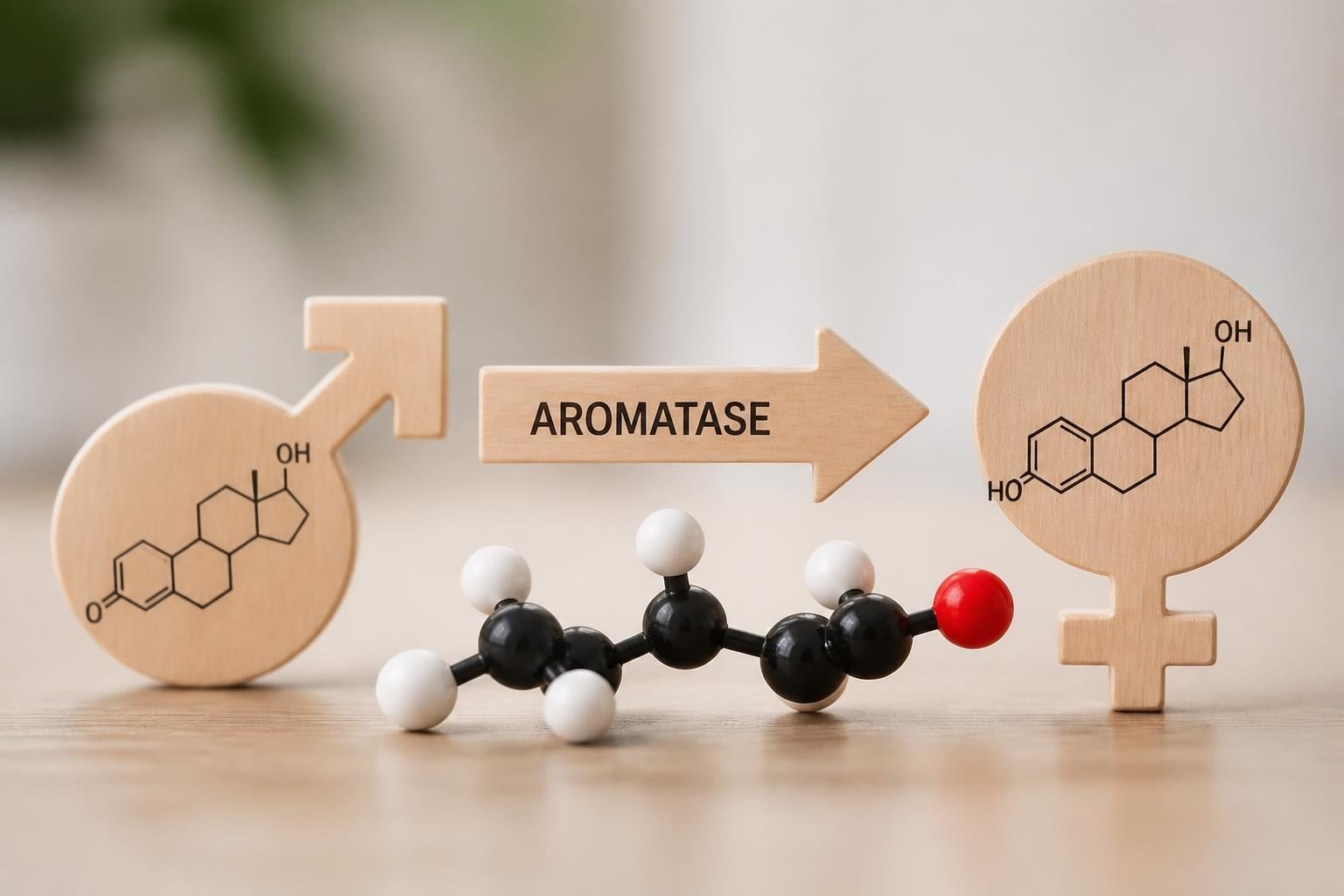
Testosterone Estrogen: Understanding Hormonal Balance
The relationship between testosterone estrogen hormones represents one of the most critical aspects of endocrine health, particularly for individuals using anabolic steroids or undergoing hormone replacement therapy. These two hormones don’t exist in isolation-they interact through complex biochemical pathways that determine everything from muscle growth to mood regulation. Understanding how testosterone converts to estrogen through aromatization, and how to manage this balance effectively, has become essential knowledge for anyone pursuing optimized hormonal health in 2026.
The Biochemical Connection Between Testosterone and Estrogen
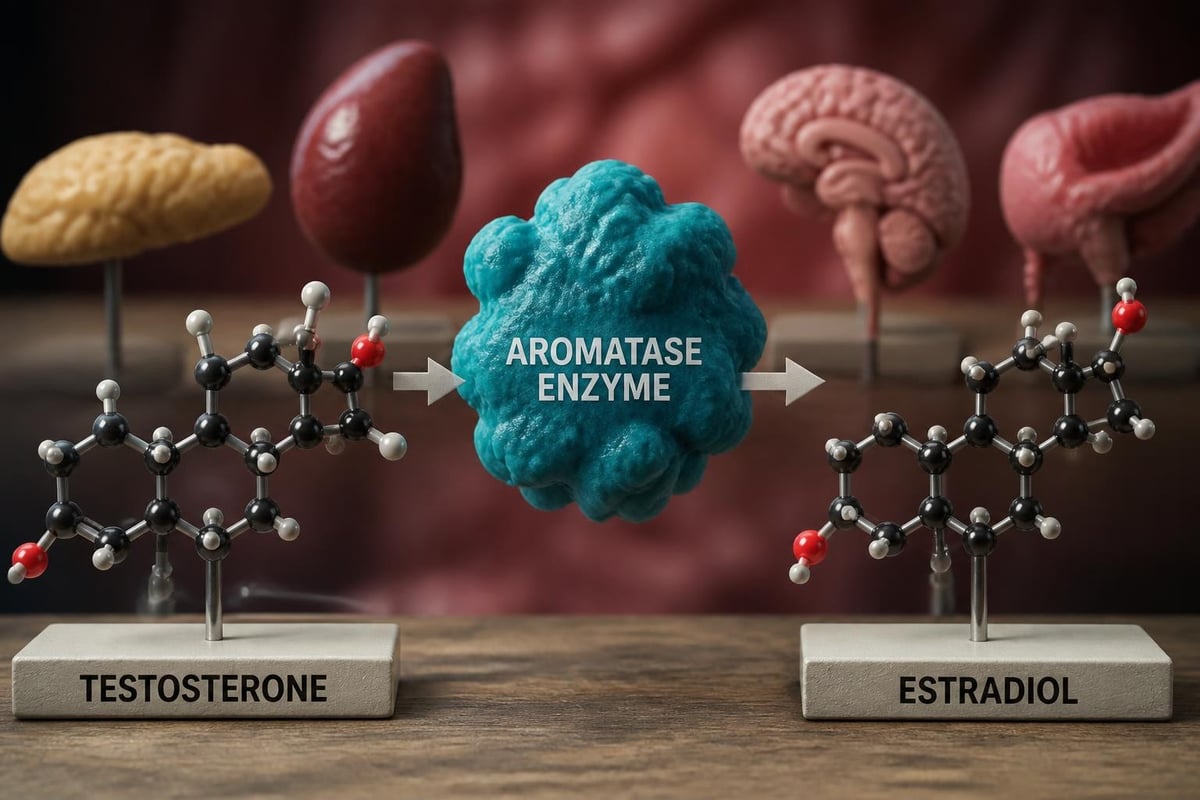
Testosterone estrogen balance begins at the molecular level through an enzyme called aromatase. This enzyme catalyzes the conversion of androgens into estrogens, specifically transforming testosterone into estradiol. The process occurs throughout the body, with particularly high aromatase activity in adipose tissue, the brain, and reproductive organs.
Key aromatization sites include:
- Subcutaneous and visceral fat deposits
- Skeletal muscle tissue
- Bone marrow
- Brain tissue (hypothalamus and limbic regions)
- Testicular Leydig cells
The rate of aromatization varies significantly between individuals based on several factors. Body composition plays a major role, as adipose tissue contains abundant aromatase enzyme. Men with higher body fat percentages typically experience greater conversion rates, leading to elevated estrogen levels relative to testosterone. Age also influences this process-aromatase activity tends to increase with aging, contributing to the gradual shift in testosterone estrogen ratios observed in older men.
Tissue-Specific Aromatization Patterns
Recent research published in Frontiers in Endocrinology has revealed that aromatization doesn’t occur uniformly throughout the body. Different tissues express varying levels of aromatase activity, creating localized testosterone estrogen environments that serve specific physiological functions.
In bone tissue, local estrogen production from testosterone supports bone mineral density and skeletal health. The brain requires localized estrogen synthesis for neuroprotection and cognitive function. Understanding these tissue-specific patterns helps explain why systemic hormone measurements don’t always correlate with clinical symptoms.
| Tissue Type | Aromatase Activity | Primary Function |
|---|---|---|
| Adipose (fat) | High | Systemic estrogen production |
| Bone | Moderate | Skeletal health maintenance |
| Brain | Moderate | Neuroprotection, cognition |
| Muscle | Low to Moderate | Local tissue regulation |
| Testes | Variable | Reproductive function |
Clinical Implications of Testosterone Estrogen Imbalance
When testosterone estrogen ratios shift outside optimal ranges, multiple physiological systems become affected. Elevated estrogen relative to testosterone-commonly seen in men using high-dose anabolic steroids without aromatase inhibitors-can trigger several unwanted effects.
Gynecomastia represents one of the most visible consequences of excessive aromatization. Breast tissue development occurs when estrogen receptors in mammary tissue become overstimulated. This condition affects approximately 30-40% of men using aromatizable steroids without proper estrogen management.
Common symptoms of elevated estrogen include:
- Water retention and subcutaneous bloating
- Emotional lability and mood swings
- Decreased libido despite adequate testosterone
- Fat accumulation in feminine patterns
- Nipple sensitivity or tissue growth
Conversely, excessively suppressed estrogen creates its own set of problems. Some users aggressively deploy aromatase inhibitors, driving estrogen levels too low. This approach backfires because estrogen plays crucial roles in male physiology beyond what many realize.
The Essential Functions of Estrogen in Men
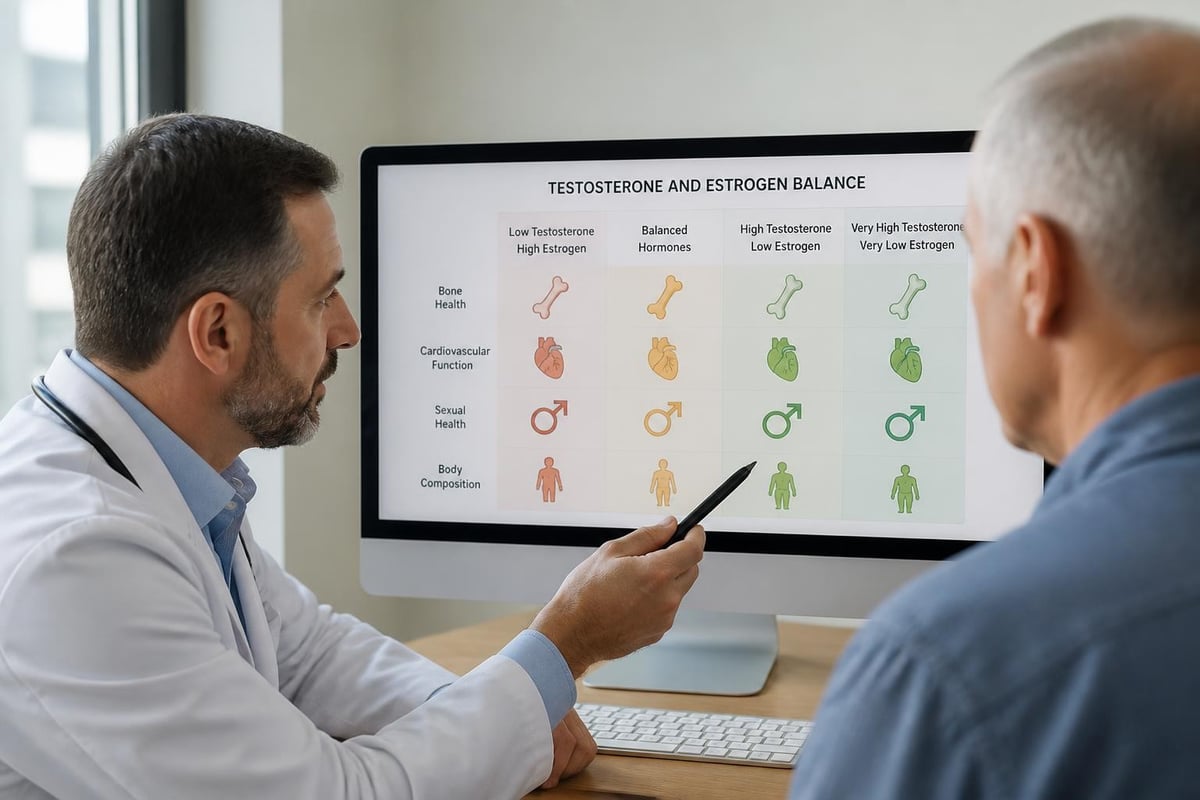
Despite testosterone receiving the spotlight in male health discussions, estrogen fulfills irreplaceable functions. Bone health depends heavily on adequate estrogen-men with extremely low estrogen levels experience accelerated bone loss and increased fracture risk. The Endocrine Society clinical practice guidelines emphasize monitoring estradiol levels during testosterone therapy for this reason.
Cardiovascular health connects directly to testosterone estrogen balance. Estrogen supports healthy endothelial function and lipid profiles. Men who crash their estrogen levels through excessive AI use often experience joint pain, reduced workout performance, and deteriorating cholesterol markers.
Sexual function requires both hormones working in concert. While testosterone drives libido, estrogen is necessary for erectile function and arousal. The sweet spot exists in maintaining both hormones within optimal ranges rather than maximizing one while eliminating the other.
Measuring and Monitoring Testosterone Estrogen Levels
Accurate measurement forms the foundation of effective hormone management. The Position Statement on sexual steroid measurement published by multiple endocrinology societies provides comprehensive guidance on testing methodologies and interpretation.
Laboratory testing for testosterone estrogen should utilize specific methodologies for accuracy. Testosterone measurement via liquid chromatography-tandem mass spectrometry (LC-MS/MS) provides superior accuracy compared to immunoassays, particularly for individuals on supraphysiological doses. Estradiol testing faces similar challenges-sensitive assays become necessary for detecting the relatively low concentrations found in men.
Optimal Reference Ranges
Standard reference ranges often fail to capture what’s optimal versus merely normal. A man with total testosterone at 350 ng/dL sits within the “normal” range but may experience significant symptoms. Similarly, estradiol levels require contextualization relative to testosterone levels rather than evaluation in isolation.
Recommended testing panel includes:
- Total testosterone
- Free testosterone (calculated or measured)
- Estradiol (sensitive assay)
- SHBG (sex hormone-binding globulin)
- Complete blood count
- Comprehensive metabolic panel
- Lipid panel
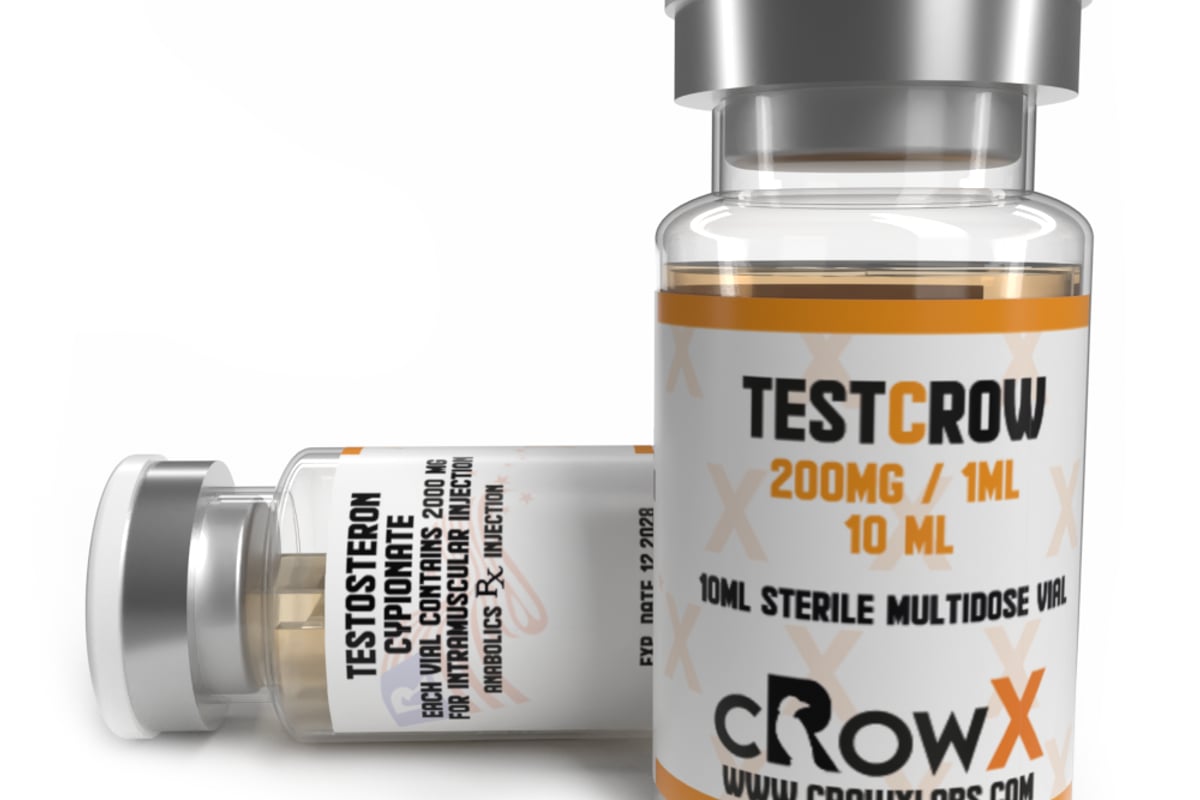
For men using Testosterone Cypionate 200mg or similar formulations, baseline testing before starting therapy and regular monitoring every 8-12 weeks during dose adjustments helps maintain optimal testosterone estrogen balance while minimizing adverse effects.
Timing of blood draws matters significantly for individuals on injectable testosterone. Levels fluctuate based on injection frequency and pharmacokinetics. Testing at trough (immediately before the next injection) provides the most conservative assessment, while mid-cycle testing better represents average exposure.
Managing Testosterone Estrogen Balance Therapeutically
Multiple strategies exist for optimizing the testosterone estrogen relationship. The approach varies based on whether someone is using therapeutic testosterone replacement or supraphysiological doses for performance enhancement.
Aromatase Inhibitor Strategies
Aromatase inhibitors (AIs) directly reduce testosterone-to-estrogen conversion. Two primary categories exist: steroidal (exemestane) and non-steroidal (anastrozole, letrozole). These medications differ in their mechanisms and recovery profiles.
| AI Type | Example | Mechanism | Half-life | Recovery |
|---|---|---|---|---|
| Non-steroidal | Anastrozole | Reversible binding | 2 days | Rapid |
| Non-steroidal | Letrozole | Reversible binding | 2 days | Rapid |
| Steroidal | Exemestane | Irreversible binding | 24 hours | Slower |
Dosing aromatase inhibitors requires careful titration based on laboratory values and symptoms. Many users make the mistake of dosing prophylactically without testing, leading to crashed estrogen levels. A measured approach involves starting with the lowest effective dose and adjusting based on follow-up bloodwork.
Typical starting protocols might include 0.25-0.5 mg anastrozole twice weekly or 12.5 mg exemestane twice weekly, with adjustments made after 4-6 weeks based on estradiol measurements. Individual aromatization rates vary dramatically-some men require no AI even on high testosterone doses, while others need aggressive estrogen management at replacement doses.
Selective Estrogen Receptor Modulators
SERMs (selective estrogen receptor modulators) offer an alternative approach to managing estrogen-related effects without suppressing total estrogen production. These compounds act as estrogen antagonists in some tissues while functioning as agonists in others.
Tamoxifen and raloxifene block estrogen receptors in breast tissue, preventing or reversing gynecomastia while maintaining estrogen’s beneficial effects on bone and lipid profiles. This tissue-selective activity makes SERMs attractive for men who need breast tissue protection but want to preserve systemic estrogen benefits.
The WPATH Standards of Care provides extensive guidance on hormone monitoring and management that applies to various contexts of testosterone estrogen manipulation.
Body Composition and Lifestyle Factors
Managing testosterone estrogen balance extends beyond pharmaceutical interventions. Body composition profoundly influences aromatase activity and hormone ratios. Reducing body fat percentage decreases aromatase enzyme availability, naturally improving testosterone-to-estrogen ratios.
Lifestyle modifications that support optimal ratios:
- Maintaining body fat below 15% for men
- Resistance training to build muscle mass
- Adequate zinc and magnesium intake
- Limiting alcohol consumption
- Managing stress and cortisol levels
- Ensuring sufficient sleep duration and quality
Dietary factors influence hormone metabolism as well. Cruciferous vegetables contain compounds like indole-3-carbinol that support estrogen metabolism through favorable pathways. Fiber intake affects enterohepatic recirculation of hormones, potentially reducing overall estrogen burden.
Xenoestrogens-environmental compounds with estrogen-like effects-represent an often-overlooked factor. Plastics, pesticides, and personal care products can contribute to total estrogenic load. Minimizing exposure through glass storage containers, organic produce when feasible, and clean personal care products may help optimize testosterone estrogen balance.
The Role of Insulin Sensitivity
Metabolic health directly impacts hormone balance. Insulin resistance correlates with increased aromatase activity and elevated SHBG, creating a triple threat that suppresses free testosterone while promoting estrogen dominance. Men with metabolic syndrome or type 2 diabetes often exhibit unfavorable testosterone estrogen ratios independent of age.
Improving insulin sensitivity through carbohydrate management, regular exercise, and maintaining healthy body weight can substantially improve hormone profiles. Some men experience significant improvements in testosterone levels and reduction in aromatization simply by addressing underlying metabolic dysfunction.
Advanced Considerations for Performance Enhancement
Athletes and bodybuilders using supraphysiological testosterone doses face unique challenges in managing testosterone estrogen balance. Doses exceeding 500 mg weekly produce exponentially higher aromatization rates, requiring more aggressive estrogen management strategies.
Combining multiple aromatizable compounds amplifies the challenge. Stacking testosterone with other aromatizing steroids like dianabol or boldenone increases total estrogenic activity. Conversely, including non-aromatizing compounds like trenbolone or masteron in a cycle can help balance overall estrogenic effects through their anti-estrogenic properties.
Blast and cruise protocols-alternating between high-dose cycles and therapeutic replacement doses-require different estrogen management approaches during each phase. During blast phases, AI requirements typically increase proportionally to testosterone dosage. Cruise phases may require dose reduction or complete AI cessation to maintain healthy estrogen levels.
Post-cycle therapy (PCT) presents particular challenges for testosterone estrogen management. As exogenous testosterone clears, natural production resumes slowly, creating temporary imbalances. SERMs play a crucial role during PCT, blocking estrogen feedback at the pituitary to stimulate natural testosterone production while preventing estrogen-related side effects during the recovery period.
Individual Variability and Personalized Approaches
Perhaps the most important principle in managing testosterone estrogen balance involves recognizing individual variability. Genetic polymorphisms in aromatase genes create substantial differences in enzyme activity between individuals. Some men possess highly active aromatase, requiring consistent AI use even at replacement testosterone doses. Others maintain excellent ratios on high-dose cycles with minimal intervention.
Receptor sensitivity varies similarly. Estrogen receptor density and responsiveness differ between individuals, meaning two men with identical estradiol levels may experience vastly different symptoms. This reality underscores why cookie-cutter protocols often fail-effective management requires individualized approaches based on laboratory values, symptoms, and response to interventions.
Age-related changes necessitate protocol adjustments over time. A regimen that worked perfectly at age 30 may require modification at 45 as natural aromatase activity increases and body composition shifts. Regular monitoring and willingness to adjust strategies ensure continued optimization throughout different life phases.
Managing testosterone estrogen balance requires understanding the complex interplay between these hormones, careful monitoring through appropriate laboratory testing, and individualized interventions based on specific needs and responses. Whether pursuing therapeutic hormone replacement or performance enhancement, maintaining optimal ratios between these hormones supports overall health while maximizing desired outcomes. For those seeking quality products and guidance in their hormone optimization journey, 24-7.is provides comprehensive solutions including testosterone formulations and estrogen management compounds to support your specific needs.