


Testosterone Cypionate Before and After: What to Expect
Testosterone cypionate stands as one of the most widely prescribed forms of testosterone replacement therapy in the United States, valued for its reliable delivery and extended half-life. Understanding what happens during a testosterone cypionate cycle requires examining both the biochemical changes occurring beneath the surface and the visible transformations that users experience. From baseline measurements through months of treatment, the progression reveals distinct patterns in body composition, strength metrics, recovery capacity, and overall vitality that vary based on dosing protocols, individual physiology, and adherence to proper monitoring.
Understanding Testosterone Cypionate Pharmacology
Testosterone cypionate is a synthetic esterified form of testosterone designed to provide sustained release after intramuscular injection. The cypionate ester extends the active life of testosterone in the body, allowing for less frequent injections compared to shorter-acting formulations.
How the Ester System Works
The cypionate ester attached to the testosterone molecule serves as a rate-limiting depot. After injection into muscle tissue, the ester must be cleaved by enzymes before the active testosterone becomes available in circulation. This enzymatic release occurs gradually over days to weeks.
The pharmacokinetic profile shows peak serum testosterone levels typically occurring 24 to 48 hours after injection, followed by a gradual decline over the subsequent week to ten days. This extended release pattern is why most therapeutic protocols call for injections every seven to fourteen days.

Key pharmacokinetic parameters include:
- Half-life: Approximately 8 days in most individuals
- Peak concentration: 24-48 hours post-injection
- Steady-state: Achieved after 4-5 weeks of consistent dosing
- Detection window: Several weeks after final injection
According to FDA prescribing information, testosterone cypionate demonstrates predictable absorption and distribution characteristics that make it suitable for long-term replacement therapy when properly monitored.
First Month: Initial Testosterone Cypionate Before and After Changes
The earliest phase of testosterone cypionate therapy reveals changes that progress from subjective improvements to measurable physiological shifts. Most users notice psychological and energy-related benefits before physical transformations become apparent.
Week 1-2: Neurological and Mood Effects
The initial two weeks often bring noticeable changes in mental state and energy levels. Many individuals report improved mood stability, increased motivation, and better mental clarity within the first several injections.
These early effects reflect testosterone’s direct action on neurotransmitter systems in the central nervous system. Androgen receptors in brain regions governing mood, cognition, and drive respond rapidly to normalized testosterone levels.
Week 3-4: Metabolic Acceleration
By the third and fourth weeks, metabolic changes become measurable. Basal metabolic rate increases as testosterone stimulates protein synthesis and shifts the body toward an anabolic state.
| Metabolic Marker | Baseline | Week 4 | Expected Change |
|---|---|---|---|
| Resting metabolic rate | Individual baseline | 5-10% increase | Elevated energy expenditure |
| Nitrogen retention | Neutral/negative | Positive | Enhanced muscle protein synthesis |
| Glycogen storage | Normal | Increased | Fuller muscle appearance |
| Water retention | Baseline | Moderate increase | 3-7 pounds typical |
Early weight gain during this period primarily reflects increased glycogen storage and associated water retention rather than actual tissue growth. Each gram of stored glycogen binds approximately three grams of water, creating a fuller appearance in muscle tissue.
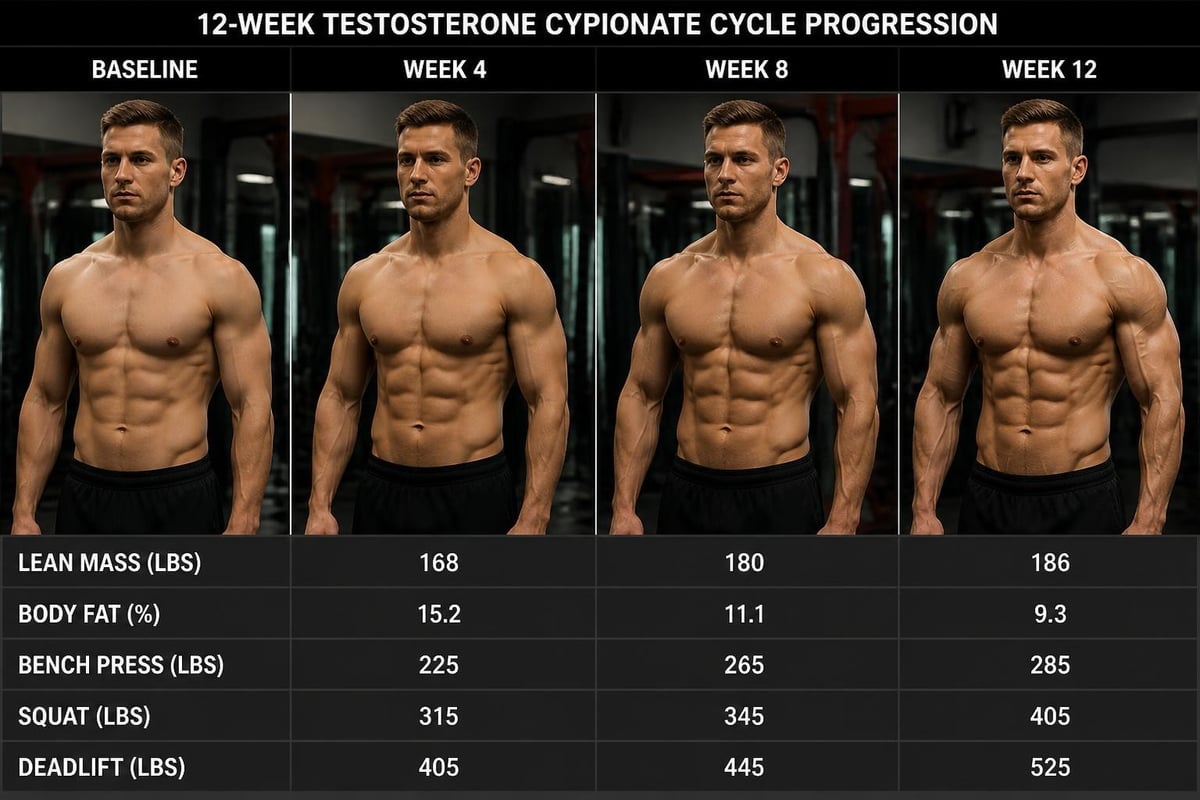
Months 2-3: Visible Testosterone Cypionate Before and After Transformations
The second and third months represent the period when testosterone cypionate before and after comparisons become visually striking. This timeframe marks the transition from metabolic preparation to actual tissue remodeling.
Body Composition Shifts
Lean muscle mass accumulation accelerates significantly during months two and three. Research examining testosterone replacement therapy demonstrates that supraphysiological doses produce more dramatic changes than replacement-level therapy.
Typical body composition changes at therapeutic doses (100-200mg weekly):
- Lean body mass gain: 2-5 pounds
- Fat mass reduction: 1-3 pounds
- Strength increase: 10-20% on major lifts
- Muscle density improvement: Noticeable increased firmness
At higher doses used for physique enhancement (400-600mg weekly):
- Lean body mass gain: 8-15 pounds
- Fat mass reduction: 3-8 pounds
- Strength increase: 20-40% on major lifts
- Vascular prominence: Significantly increased
The magnitude of change depends heavily on training intensity, nutritional optimization, and baseline testosterone levels. Individuals starting from clinically low testosterone often experience more dramatic improvements than those with normal baseline levels.
Recovery and Performance Enhancement
Enhanced recovery capacity becomes one of the most functional benefits during this phase. Testosterone accelerates muscle protein synthesis and reduces muscle protein breakdown, shortening the time needed between training sessions.
Athletes and recreational lifters consistently report the ability to train with greater volume and frequency. Delayed onset muscle soreness (DOMS) diminishes, and the sensation of being “fresh” for subsequent workouts improves markedly.
A comprehensive review on testosterone replacement therapy discusses how individualized dosing protocols can optimize these benefits while minimizing adverse effects.
Months 4-6: Peak Testosterone Cypionate Before and After Results
The four to six-month window typically represents peak visible and measurable outcomes for a testosterone cypionate cycle. Muscle maturation, strength plateaus, and metabolic adaptations reach their maximum expression during this period.
Muscle Maturation and Quality
Beyond simple size increase, muscle quality improves substantially. Muscle density, hardness, and separation between muscle groups become more pronounced as intramuscular water stabilizes and contractile protein content maximizes.
The visual “finish” that differentiates enhanced physiques from natural development becomes apparent. Muscle bellies appear fuller with more prominent striations and visible vascularity, particularly in individuals maintaining lower body fat percentages.
Strength and Power Adaptations
Absolute strength continues climbing through month six, though the rate of gain typically slows compared to the explosive improvements in months two and three. Neuromuscular adaptations complement the structural muscle changes, improving motor unit recruitment and firing patterns.
Documented strength progressions (percentage increases from baseline):
- Bench press: 25-45% improvement
- Squat: 30-50% improvement
- Deadlift: 35-55% improvement
- Overhead press: 20-40% improvement
- Power output: 15-30% improvement
These ranges reflect combined data from therapeutic use and performance-enhancement protocols, with higher-dose regimens producing results at the upper end of these ranges.
Sexual Function and Libido Changes
Testosterone’s effects on sexual function represent a primary motivation for many seeking therapy. The testosterone cypionate before and after timeline for sexual improvements follows a distinct pattern separate from physical changes.
Libido and Drive Restoration
Sexual desire typically increases within the first two to four weeks of therapy. Men with clinically low testosterone often report dramatic improvements in spontaneous erections, sexual thoughts, and overall interest in sexual activity.
This rapid response reflects testosterone’s direct effects on libido centers in the hypothalamus and limbic system. Unlike structural changes that require time to develop, neurological effects manifest quickly once hormone levels normalize.
Erectile Function Improvements
Erectile quality improvements follow a slightly delayed timeline compared to libido changes. Weeks four through eight typically bring measurable improvements in rigidity, duration, and reliability of erections.
The mechanisms involve both direct vascular effects and psychological components. Testosterone promotes nitric oxide production in endothelial cells, improving blood flow to erectile tissue. Simultaneously, improved mood and confidence create a positive feedback loop enhancing sexual performance.
Studies on testosterone and reproductive function note that while testosterone improves sexual function in hypogonadal men, it simultaneously suppresses spermatogenesis through negative feedback on the hypothalamic-pituitary-gonadal axis.
Cardiovascular and Hematological Adaptations
Testosterone cypionate produces several cardiovascular and blood-related changes that require monitoring throughout therapy. Some changes prove beneficial while others necessitate management strategies.
Red Blood Cell Production
Testosterone stimulates erythropoietin production in the kidneys, accelerating red blood cell formation. This effect becomes measurable within weeks and continues throughout therapy.
| Hematological Parameter | Baseline Range | After 3 Months | After 6 Months |
|---|---|---|---|
| Hemoglobin (g/dL) | 13.5-17.5 | 15.0-18.5 | 15.5-19.0 |
| Hematocrit (%) | 38-50 | 45-52 | 47-54 |
| Red blood cell count | 4.5-5.5 million/μL | 5.0-6.0 million/μL | 5.2-6.2 million/μL |
Elevated hematocrit improves oxygen-carrying capacity, potentially enhancing endurance and recovery. However, excessive elevation increases blood viscosity and cardiovascular risk, necessitating therapeutic phlebotomy in some cases.
Blood Pressure and Lipid Changes
Blood pressure tends to increase modestly during testosterone therapy, particularly at supraphysiological doses. This effect stems from multiple mechanisms including increased red blood cell mass, sodium retention, and direct vascular effects.
Lipid profiles show mixed changes. HDL cholesterol typically decreases 10-20%, while LDL cholesterol may increase, decrease, or remain stable depending on individual factors and concomitant lifestyle modifications.
The Endocrine Society guidelines emphasize regular monitoring of cardiovascular risk factors throughout testosterone replacement therapy.
Psychological and Cognitive Effects Timeline
Beyond physical transformations, testosterone cypionate produces significant psychological and cognitive changes that profoundly impact quality of life. These effects follow their own progression separate from muscular and metabolic adaptations.
Mood Stabilization and Well-Being
Men with low testosterone frequently experience depression, irritability, and emotional instability. Testosterone normalization often produces dramatic mood improvements within the first month of therapy.
Psychological benefits reported in clinical studies:
- Reduced depressive symptoms
- Decreased anxiety
- Improved emotional stability
- Enhanced sense of well-being
- Increased confidence and assertiveness
These changes reflect testosterone’s complex interactions with neurotransmitter systems including dopamine, serotonin, and GABA. The mood-enhancing effects often prove as valuable as physical improvements for overall quality of life.
Cognitive Function Enhancement
Cognitive improvements emerge more gradually than mood changes. Memory, focus, and mental processing speed show measurable enhancement typically between weeks 4 and 12 of therapy.
Spatial memory and verbal recall demonstrate particular sensitivity to testosterone levels. Studies using neuropsychological testing batteries document improvements in these domains during testosterone replacement in hypogonadal men.

Side Effect Management and Mitigation Strategies
Understanding the testosterone cypionate before and after picture requires acknowledging potential adverse effects alongside benefits. Proper management strategies minimize negative outcomes while preserving therapeutic gains.
Estrogen-Related Side Effects
Testosterone converts to estradiol through the aromatase enzyme, potentially causing estrogen-related side effects. These may include gynecomastia (breast tissue development), water retention, and emotional sensitivity.
Aromatase inhibitors effectively control estrogen elevation when necessary. Anastrozole and exemestane represent commonly used options, though they should be titrated carefully to avoid excessive estrogen suppression.
Androgenic Side Effects
Androgenic effects including acne, oily skin, and accelerated male pattern baldness affect genetically susceptible individuals. The severity correlates with dosage and individual sensitivity to dihydrotestosterone (DHT), a potent testosterone metabolite.
Common androgenic side effects and management:
- Acne: Topical treatments, antibiotics if severe, adjusting injection frequency
- Hair loss: 5-alpha reductase inhibitors (finasteride) for susceptible individuals
- Prostate enlargement: Regular monitoring, dose adjustment if symptomatic
- Sleep apnea: Assessment before therapy, CPAP therapy if develops
Suppression of Natural Production
Exogenous testosterone suppresses the hypothalamic-pituitary-testicular axis, shutting down natural testosterone production. This effect occurs rapidly and persists throughout therapy and for weeks to months after discontinuation.
Recovery protocols using selective estrogen receptor modulators and human chorionic gonadotropin can accelerate restoration of natural production, though complete recovery is not guaranteed, particularly after prolonged use.
Detailed information on anabolic-androgenic steroid mechanisms explains how exogenous testosterone affects the endocrine system’s feedback loops.
Dosing Protocols and Their Impact on Results
The testosterone cypionate before and after experience varies dramatically based on dosing strategies. Therapeutic replacement differs substantially from performance-enhancement protocols in both outcomes and risk profiles.
Therapeutic Replacement Protocols
Medical testosterone replacement typically aims to restore levels to the mid-normal physiological range. Standard protocols use 100-200mg testosterone cypionate weekly or 200-400mg every two weeks.
For individuals seeking medically supervised therapy, products like Testosterone Cypionate 200mg provide a standardized formulation commonly prescribed for replacement purposes, though such therapy should only be undertaken with proper medical supervision and regular bloodwork monitoring.

These conservative doses produce:
- Restoration to normal testosterone levels (400-800 ng/dL)
- Gradual improvements in body composition over 6-12 months
- Enhanced quality of life without excessive side effects
- Sustainable long-term therapy with manageable monitoring requirements
Performance Enhancement Protocols
Supraphysiological doses (400-1000mg+ weekly) produce more dramatic changes but carry substantially higher risks. Serum testosterone levels may reach 2000-5000 ng/dL or higher, far exceeding natural physiological ranges.
Enhanced protocols accelerate muscle growth, strength gains, and fat loss but increase the likelihood and severity of side effects. Cardiovascular strain, hormonal disruption, and long-term health impacts become more significant concerns.
A practical guide on individualizing injectable testosterone therapy emphasizes the importance of tailoring doses to individual responses and treatment goals.
Training and Nutrition Optimization
Maximizing testosterone cypionate before and after results requires strategic training and nutritional approaches. Hormonal optimization creates an enhanced anabolic environment, but stimulus and substrates remain essential for tissue growth.
Training Adaptations During Therapy
Enhanced recovery capacity allows increased training volume and frequency. Most individuals can productively handle 20-40% more training volume compared to their natural capacity.
Optimal training strategies during testosterone therapy:
- Progressive overload with emphasis on compound movements
- Increased training frequency (5-6 sessions weekly vs. 3-4)
- Higher volume per muscle group (15-25 sets weekly vs. 10-15)
- Shorter rest periods between sets (enhanced work capacity)
- Greater exercise variety to stimulate complete muscle development
The enhanced protein synthesis rates mean muscle damage from training converts more efficiently to growth rather than simply requiring extended recovery.
Nutritional Requirements
Protein requirements increase during testosterone therapy to support accelerated muscle protein synthesis. While natural lifters benefit from 0.7-1.0 grams per pound bodyweight, enhanced individuals often optimize results at 1.2-1.5 grams per pound.
Caloric surplus facilitates maximal muscle growth, though the degree of surplus should align with goals. A modest surplus (300-500 calories above maintenance) promotes muscle gain while minimizing fat accumulation. More aggressive surpluses accelerate overall weight gain but with increased fat storage.
Long-Term Considerations and Sustainability
Evaluating testosterone cypionate before and after outcomes requires considering sustainability and long-term health implications. Short-term gains must be weighed against prolonged effects on natural hormone production and overall health.
Maintaining Gains Post-Cycle
Discontinuing testosterone results in rapid loss of some benefits, particularly those dependent on supraphysiological hormone levels. Water weight and glycogen storage decrease quickly, often within the first two weeks after final injection.
Actual muscle tissue proves more durable, though some regression is inevitable as testosterone levels normalize. Individuals typically retain 60-80% of muscle gains if training and nutrition remain optimized during the recovery period.
Natural Production Recovery
The hypothalamic-pituitary-testicular axis requires time to resume normal function after suppression. Recovery duration depends on cycle length, dosage, individual physiology, and whether post-cycle therapy is implemented.
Typical recovery timelines:
- Short cycles (8-12 weeks): 2-4 months for normalization
- Extended cycles (16-24 weeks): 4-8 months for normalization
- Prolonged use (6+ months): 6-12+ months, potentially incomplete recovery
Some individuals never fully recover natural production, particularly after years of continuous use. This reality necessitates careful consideration before initiating therapy, especially in younger individuals with functioning natural production.
Monitoring and Safety Protocols
Comprehensive monitoring throughout testosterone therapy ensures both efficacy and safety. Regular assessment catches developing issues before they become serious health concerns.
Essential Laboratory Testing
Blood work should be performed before initiating therapy to establish baseline values, then repeated at regular intervals throughout treatment. The comprehensive metabolic panel combined with hormone-specific testing provides complete oversight.
| Test | Baseline | Week 6 | Month 3 | Month 6 | Annually |
|---|---|---|---|---|---|
| Total testosterone | Required | Required | Required | Required | Required |
| Free testosterone | Recommended | Recommended | Required | Required | Required |
| Estradiol | Required | Required | Required | Required | Required |
| Complete blood count | Required | Required | Required | Required | Required |
| Lipid panel | Required | – | Required | Required | Required |
| Liver function | Required | – | Required | Required | Required |
| PSA (men 40+) | Required | – | Required | Required | Required |
Recent reviews on testosterone cypionate pharmacology emphasize the importance of consistent monitoring to optimize dosing and identify complications early.
Clinical Assessment
Beyond laboratory values, clinical assessment monitors subjective response and identifies issues that bloodwork might miss. Regular evaluation should include:
- Blood pressure measurement
- Body composition tracking
- Symptom questionnaires
- Physical examination
- Discussion of side effects and quality of life
This comprehensive approach balances objective data with subjective experience, ensuring therapy delivers meaningful improvements while maintaining safety.
Understanding testosterone cypionate before and after changes provides realistic expectations for those considering therapy, whether for medical replacement or performance enhancement. The transformation timeline spans weeks to months, with distinct phases for different outcomes ranging from rapid psychological improvements to gradual structural muscle changes. When pursued with proper medical oversight, appropriate dosing, comprehensive monitoring, and realistic expectations, testosterone cypionate therapy can deliver significant improvements in body composition, performance, and quality of life. 24-7.is provides access to testosterone products and related compounds for individuals working with medical professionals to optimize their hormone therapy protocols, ensuring quality formulations support safe and effective treatment outcomes.





