How long does testosterone stay in your system?
How Long Does Testosterone Stay in Your System?
Testosterone does not disappear from the body immediately after an injection or after stopping testosterone treatment. How long it remains in the system depends on several factors, including the type of testosterone used, the dose, how often it is administered, and how quickly the body metabolizes it.
Different testosterone formulations have different half-lives, meaning the amount of testosterone in the body decreases at different rates. This is particularly important for people using testosterone replacement therapy (TRT), because testosterone levels can remain elevated for some time after the last dose.
In this article, we look at how long testosterone can remain in the body, what affects testosterone clearance, and why the answer can vary considerably from one person to another.
What Determines How Long Testosterone Stays in the Body?
There is no single timeframe that applies to everyone. Testosterone is available in several forms, and each formulation behaves differently once it enters the bloodstream.
One of the most important factors is the testosterone ester. An ester is attached to testosterone to control how quickly it is released and broken down by the body.
Other factors can also influence how long testosterone remains in the body, including:
- The testosterone formulation: Different esters have different release rates and half-lives.
- Dosage: Larger amounts may take longer to decline to lower levels.
- Frequency of administration: Repeated doses can result in testosterone accumulating in the body.
- Individual metabolism: People process medications at different rates.
- Liver and kidney function: These organs are involved in processing and eliminating substances from the body.
- Duration of treatment: Testosterone levels can behave differently after repeated administration compared with a single dose.
What Is Testosterone Half-Life?
The term half-life is commonly used when discussing how long testosterone remains in the body. Half-life refers to the approximate amount of time required for the concentration of a substance in the body to decrease by half.
For example, if a medication has a half-life of 8 days, it does not mean that the medication is completely gone after 8 days. Approximately half remains after one half-life, around one-quarter after two half-lives, and so on.
This is why testosterone can continue to have an effect after blood levels have already started falling.
How Long Do Different Types of Testosterone Stay in the Body?
The answer depends heavily on the particular testosterone formulation.
Testosterone Cypionate
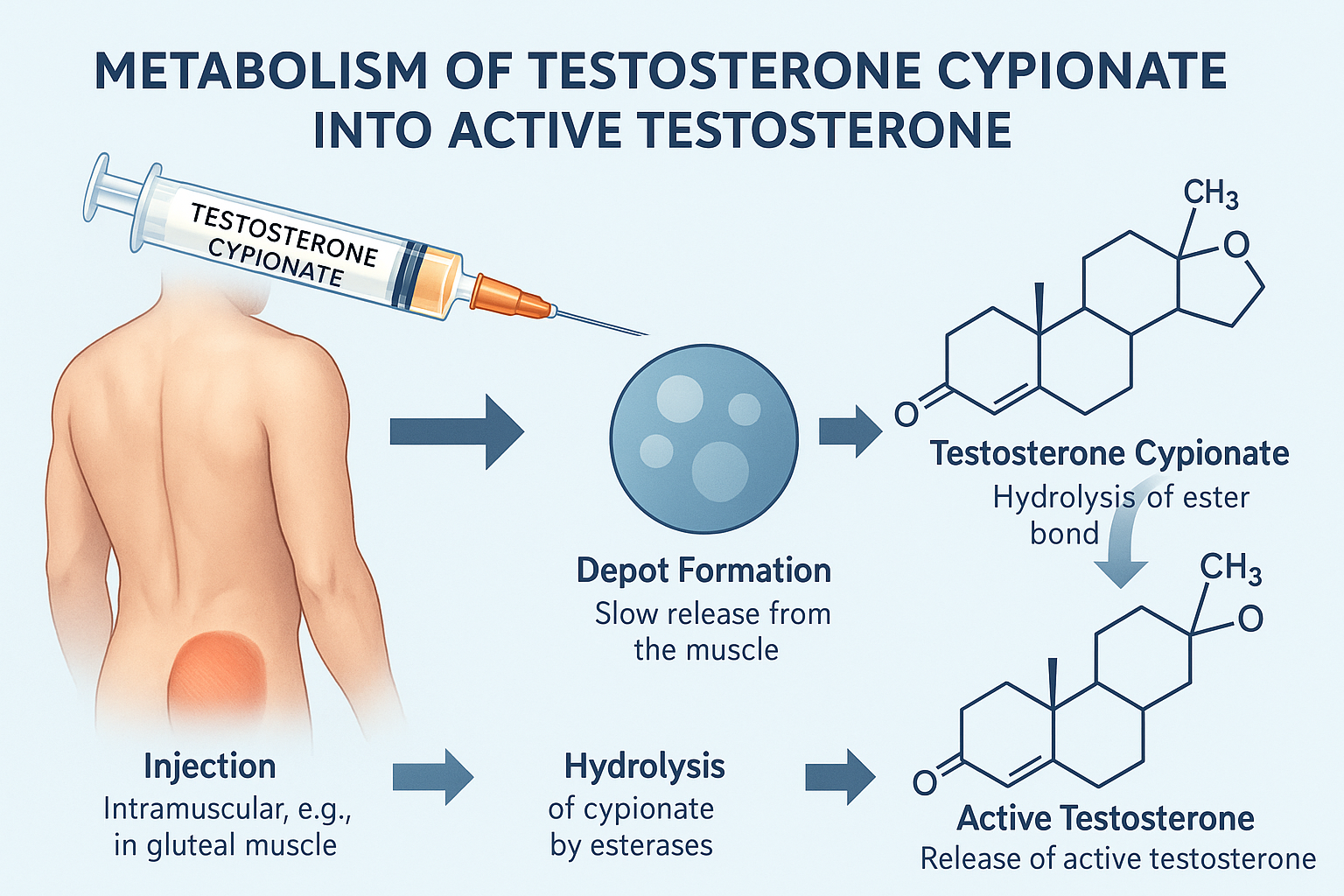
Testosterone cypionate is a long-acting injectable form of testosterone commonly used in testosterone replacement therapy.
Its half-life is generally measured in days rather than hours. Because of this relatively slow release, testosterone levels can remain elevated for a considerable period after an injection.
The exact amount of time required for testosterone levels to decline depends on the individual, the dose, and whether the person has been receiving regular injections.
Testosterone Enanthate
Testosterone enanthate is another long-acting injectable testosterone ester. Like testosterone cypionate, it is designed to release testosterone gradually rather than all at once.
After an injection, testosterone levels rise and then gradually decline. With repeated treatment, the previous doses can overlap with newer doses, which means testosterone may remain in the body for longer than it would after a single administration.

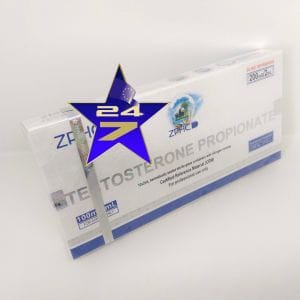
Testosterone Propionate
Testosterone propionate is a shorter-acting testosterone ester. It is released and cleared more quickly than longer-acting formulations such as testosterone cypionate and testosterone enanthate.
Because it has a shorter duration of action, testosterone propionate generally produces a faster rise and decline in testosterone levels.
Testosterone Undecanoate
Testosterone undecanoate is a much longer-acting formulation. Depending on the specific product and route of administration, it can remain active in the body for an extended period.
Long-acting formulations are designed to provide more sustained testosterone exposure, which means the hormone can take substantially longer to decline after the final administration.
How Testosterone Is Metabolized
After testosterone enters the bloodstream, the body continuously processes and breaks it down.
The liver plays an important role in testosterone metabolism. Testosterone can also be converted into other hormones, including dihydrotestosterone (DHT) and estradiol, depending on the body’s enzymes and tissues.
Eventually, testosterone and its metabolites are processed and eliminated from the body, primarily through metabolic pathways involving the liver and kidneys.
This process is gradual rather than instantaneous, which explains why testosterone levels can remain measurable after the last dose.
Does Testosterone Stay Longer After Repeated Injections?
It can.
When testosterone is administered repeatedly, each dose is added before the previous dose has necessarily been completely eliminated. This can cause testosterone levels to build toward a relatively stable range known as steady state.
This is one reason why the amount of time testosterone remains in the body after stopping treatment cannot always be estimated simply from the half-life of a single injection.
Someone who has received regular testosterone treatment for an extended period may have a different testosterone level profile after their last injection than someone who received only one dose.
How Long Does Testosterone Take to Leave Your System?
There is an important difference between saying that testosterone is declining and saying that it is completely gone.
After each half-life, the amount of testosterone decreases further, but small amounts can remain for several half-lives. The precise timeframe varies according to the formulation and the individual.
For this reason, there is no reliable single number of days that applies to every testosterone injection.
Longer-acting testosterone preparations can take substantially longer to decline than shorter-acting preparations.
How Long Can Testosterone Be Detected?
Detection is not exactly the same thing as the drug remaining active in the body.
Different types of testing may look for testosterone itself, testosterone metabolites, or changes in hormone patterns. Specialized testing can sometimes identify evidence of testosterone use after the amount of active testosterone in the bloodstream has already fallen considerably.
The detection window can therefore depend on:
- The specific testosterone formulation
- How frequently it was used
- The amount administered
- The length of time it was used
- The type of test being performed
- The sensitivity and methodology of the laboratory
There is consequently no universal detection period that applies to all testosterone users.
What Happens to Testosterone Levels After Stopping Treatment?
Stopping testosterone does not necessarily mean that the body’s testosterone levels immediately return to their previous baseline.
If testosterone has been supplied from outside the body for an extended period, the body’s natural hormone production can be suppressed. The time required for natural production to recover varies considerably between individuals.
Factors such as the duration of testosterone treatment, the formulation used, individual physiology, age, and underlying health can all influence recovery.
This is one reason why people receiving testosterone replacement therapy should discuss stopping treatment with a qualified healthcare professional rather than making changes independently.
Testosterone and Testosterone Replacement Therapy
Testosterone replacement therapy is prescribed for men who have clinically confirmed testosterone deficiency and appropriate symptoms or medical indications.

Different TRT products have different pharmacokinetic profiles. Some are administered by injection, while other forms of testosterone are available through different routes of administration.
Because formulations behave differently, the expected duration of testosterone exposure also differs.
People receiving TRT are commonly monitored with blood tests and clinical assessments. These measurements help healthcare professionals determine whether testosterone levels are appropriate and whether treatment needs to be adjusted.
Factors That Can Affect Testosterone Clearance
Several factors can influence how quickly testosterone and its metabolites are processed.
Type of Testosterone
The formulation is one of the most important factors. Shorter-acting testosterone esters generally decline more quickly, while longer-acting formulations remain in the body for longer.
Dose and Frequency
Higher exposure and repeated administration can result in testosterone accumulating in the body. This can affect how long it takes levels to decline after treatment stops.
Individual Metabolism
People do not all metabolize medications at exactly the same rate. Differences in metabolism, body composition, age, and overall health can contribute to variations in testosterone levels.
Liver and Kidney Function
The liver and kidneys are important to the body’s processing and elimination of hormones and their metabolites. Changes in the function of these organs can influence how medications and hormones are handled.
Can You Speed Up Testosterone Clearance?
There is no proven method that safely and dramatically accelerates the body’s natural clearance of a long-acting testosterone preparation.
Trying to manipulate testosterone levels through unapproved medications, excessive exercise, dehydration, supplements, or other methods can create additional health risks.
If testosterone levels need to be reduced or treatment needs to be stopped, the safest approach is to discuss the situation with a qualified healthcare professional.
Why Blood Tests Matter
If someone needs to know their current testosterone status, a blood test is much more useful than trying to estimate the level based solely on the number of days since the last injection.
Healthcare professionals may consider total testosterone, free testosterone and other laboratory measurements depending on the reason for testing.
The timing of the blood test in relation to the most recent testosterone dose is also important because testosterone levels can fluctuate depending on the formulation and dosing schedule.
Frequently Asked Questions
How long does one testosterone injection stay in your system?
It depends on the testosterone formulation. Shorter-acting preparations decline more quickly, while long-acting injections such as testosterone cypionate, testosterone enanthate, and testosterone undecanoate can remain in the body for considerably longer.
Does testosterone stay in your system for weeks?
It can. Some long-acting testosterone preparations can continue releasing testosterone for weeks after administration. The exact timeframe depends on the specific formulation, dose, treatment schedule, and individual metabolism.
How long does testosterone cypionate stay in your system?
Testosterone cypionate is a long-acting testosterone ester. Its concentration declines gradually rather than disappearing immediately after an injection. Multiple half-lives may be required for levels to fall substantially, and repeated injections can extend the overall period of elevated testosterone exposure.
How long does testosterone enanthate stay in your system?
Testosterone enanthate is also a long-acting formulation. Testosterone levels gradually decline after administration, with the exact duration depending on the dose, treatment frequency, individual metabolism, and whether the person has been using testosterone repeatedly.
Does stopping testosterone immediately stop its effects?
No. Testosterone levels generally decline gradually after the last dose rather than falling to zero immediately. In addition, the body’s natural testosterone production may take time to recover after prolonged external testosterone use.
Can a blood test show whether testosterone is still in the body?
A blood test can measure testosterone levels at the time the sample is taken, but the result needs to be interpreted in relation to the type of testosterone used, treatment schedule, and timing of the test.
Does testosterone stay longer in the body after long-term TRT?
Repeated testosterone administration can result in overlapping doses and accumulation toward steady-state levels. This can make the decline after stopping treatment different from what would occur after a single dose.
Should I stop testosterone treatment on my own?
Anyone considering stopping prescribed testosterone should discuss it with their healthcare professional first. Stopping treatment can affect hormone levels and symptoms, particularly when testosterone has been used for an extended period.
Conclusion
So, how long does testosterone stay in your system? There is no single answer because testosterone comes in several formulations with very different release and elimination profiles.
Shorter-acting testosterone preparations generally leave the body more quickly, while long-acting injectable forms can continue releasing testosterone for weeks. Repeated treatment, dosage, metabolism, and individual health can also affect how quickly testosterone levels decline.
The most reliable way to determine a person’s current testosterone status is through appropriate laboratory testing and professional medical evaluation rather than relying on a fixed number of days.
If you are using testosterone replacement therapy or another testosterone product and have questions about how long it may remain in your body, speak with a qualified healthcare professional who can interpret your specific treatment and test results.
FREE SHIPPING
CLICK HERE!
HOT PROMOTIONS!